
Happy Tiger Sister Sites
This forensic audit examines Happy Tiger sister sites through operator identity, UKGC licensing, bonus terms, banking transparency, complaints, and safer-gambling controls.

Happy Tiger Sister Sites Comparison Table
Happy Tiger sister sites are unusually limited: Spin King is the only directly confirmed same-operator brand, so the comparison also includes verified alternatives where the same-operator link is unconfirmed. Players comparing this thin network with sites like Luna Casino should focus on licensing certainty, bonus portability, and payment transparency rather than brand volume.
| Brand | Our Rating | Welcome Bonus | Payout Speed | Top Feature |
|---|---|---|---|---|
| Happy Tiger | 8.6/10 | 100% up to £100; 10x deposit plus bonus on selected slots or effective 5x on bingo | Advertised as fast, often minutes after checks | Proprietary bingo and slot catalogue |
| Spin King | 8.2/10 | Same licence offer structure; one welcome offer across Happytiger ApS brands | Advertised fast withdrawals | Royal-themed slots plus shared in-house titles |
| Double Bubble Bingo | 8.0/10 | Play £10 get £25 free bingo or 30 free spins, rules apply | Operator does not state a single universal timeline | Bingo, Slingo, casino and sports under Gamesys Operations Limited |
| Regal Wins | 7.1/10 | Promotional bundle and bonusback offers reported on site | Site states many withdrawals are processed within 10 minutes | Rank Interactive casino with large live-casino mix |
| Butlers Bingo | 7.3/10 | Bonus terms should be verified on the live site before deposit | Not yet reported consistently | Independent bingo-led UK alternative |
| The Sun Vegas | 7.5/10 | Promotions vary by campaign and should be checked live | Not yet reported consistently | Media-branded UK casino and bingo alternative |
Best by Player Type — Quick Verdict
The best Happy Tiger sister sites choice depends on whether the player values confirmed same-operator status or just wants a regulated Happy Tiger alternative with a broader game lobby. Compared with Play Jango sister sites, the Happy Tiger cluster is narrower and more UKGC-focused.
| Player Type | Best Pick | Why |
|---|---|---|
| Large bankroll | Regal Wins | Broader table and live-casino limits, but not a Happytiger ApS sister |
| Small-stake casual | Happy Tiger | Low-stake slots and bingo are central to the site identity |
| Crypto-first | None profiled | No verified crypto banking was found across the Happy Tiger sister site set |
| Sportsbook-focused | Double Bubble Bingo | Sports appears in its navigation, although bingo remains the main fit |
| Broadest catalogue | Regal Wins | Wider third-party slot, live and table range than Happy Tiger |
| Lowest-risk verified brand | Spin King | Confirmed same Happytiger ApS operator and UKGC account 57641 |
Spin King – Best Happy Tiger Sister Site for Royal-Themed Slots
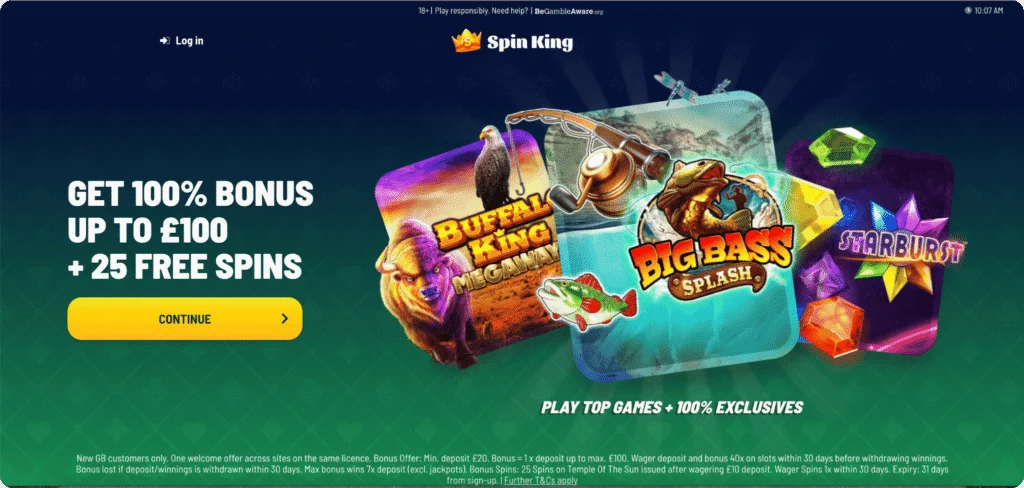
Spin King is the only confirmed same-operator entry in this audit. Its own footer states that Spin King is operated by Happytiger ApS and licensed in Great Britain by the Gambling Commission under account number 57641. That matches the verified Happy Tiger operator record: Happytiger ApS, Denmark, UKGC account 57641, operating licence reference 057641-R-333524-007.
The bonus position is materially linked to Happy Tiger. Happy Tiger’s current welcome terms state that one welcome offer is available across the same licence and name happytiger.co.uk and spinking.co.uk as the current Happytiger ApS brands. That matters because players cannot treat Spin King sister sites as separate bonus islands inside the same operator.
Spin King differs by wrapping the same regulatory base in a slots-first, royal-themed layout. Its site names Pragmatic, NetEnt, Big Time Gaming and Nolimit City, while also promoting exclusive in-house slots. Players comparing casinos similar to Fitzdares for sportsbook depth will not find the same sports-led proposition here.
Banking is presented around fast payouts rather than a detailed public withdrawal SLA. Casino Guru had not surfaced a dedicated Spin King Safety Index page at time of research, while Trustpilot showed 3.3 from 103 reviews in June 2026, with praise for quick withdrawals and criticism around perceived value.
Spin King Snapshot
| Metric | Experience |
|---|---|
| Site Identity | Verified Happy Tiger sister site under Happytiger ApS UKGC account 57641 |
| Standout Mechanic | Royal-themed slots, jackpots and shared exclusive titles |
| Game Edge | More mainstream slots than Happy Tiger, fewer bingo signals |
| Payout Speed | Advertised as fast; Trustpilot reviews frequently mention quick withdrawals |
| The Trade-Off | Thin public detail on withdrawal rules before login |
| Best For | Players who want the confirmed Happy Tiger sister site rather than a broader alternative |
Double Bubble Bingo – Best Happy Tiger Alternative for Bingo Variety
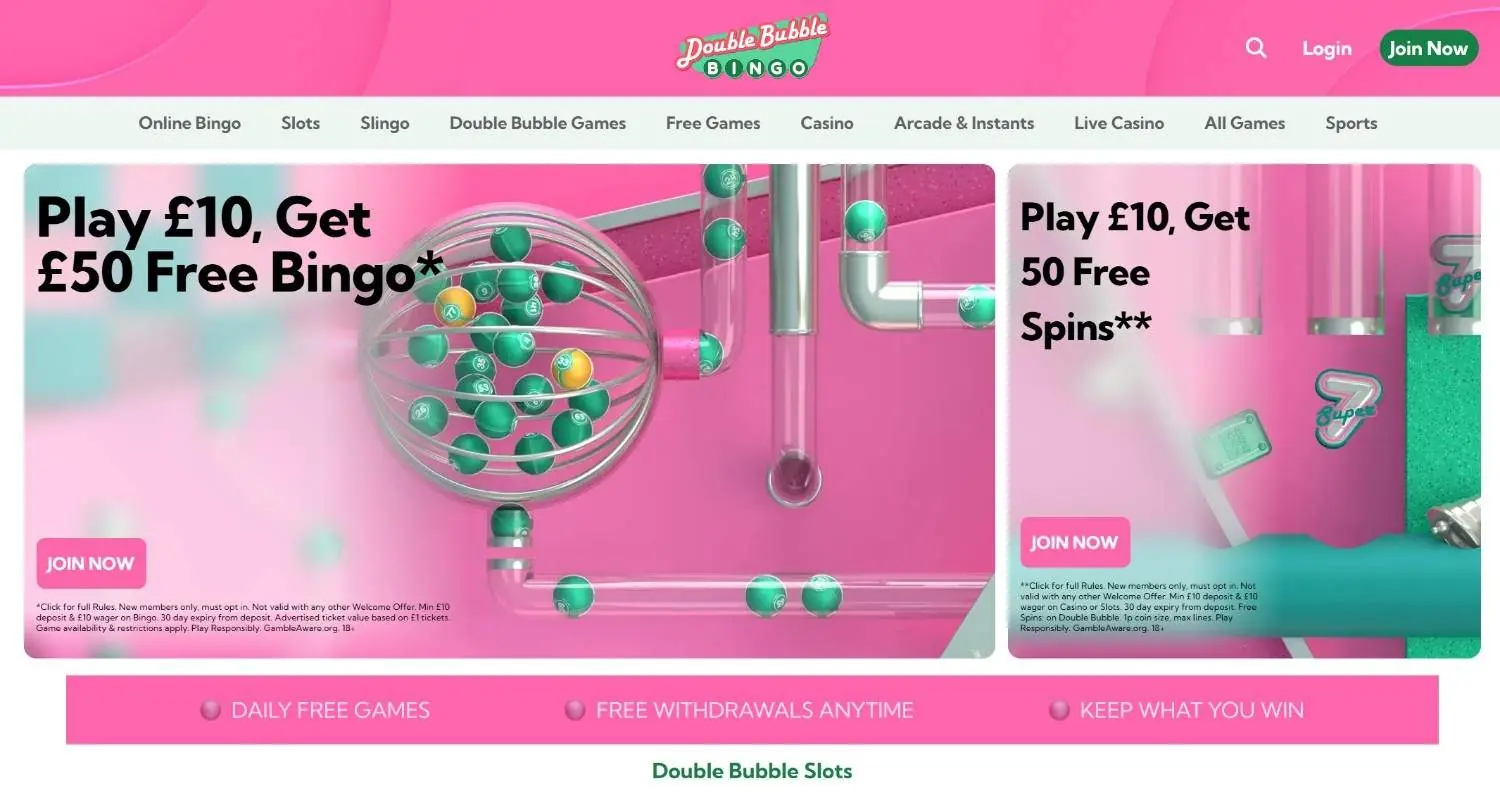
Double Bubble Bingo is a verified alternative, not a confirmed Happytiger ApS sister. Its footer states that Double Bubble Bingo is operated by Gamesys Operations Limited of Gibraltar and licensed by the Gambling Commission under account number 38905. That makes it useful for comparison, but it should not be described as one of the same-operator Happy Tiger sister sites.
The visible welcome offer is bingo-led: play £10 and get £25 free bingo, or play £10 and get 30 free spins, subject to opt-in rules, game restrictions and 30-day expiry. That is simpler to understand than some cash-match offers, but players still need to read the offer rules before using funds.
Double Bubble Bingo sister sites comparisons are relevant because this is a bingo-first brand with slots, Slingo, casino, live casino and sports in the navigation. Casino Guru listed a High Safety Index of 8.9 in March 2026 and verified UKGC and Gibraltar licensing on its profile.
Banking visibility is less forensic than Happy Tiger’s explicit fast-withdrawal messaging. The stronger case for Double Bubble Bingo is breadth: it is a larger ecosystem than Happy Tiger, but it is not the same operator and does not share Happytiger ApS bonus eligibility.
Double Bubble Bingo Snapshot
| Metric | Experience |
|---|---|
| Site Identity | Verified alternative; status as same-operator sister unconfirmed and not supported by footer evidence |
| Standout Mechanic | Bingo, branded Double Bubble games, Slingo and casino |
| Game Edge | Broader third-party provider range than Happy Tiger |
| Payout Speed | No single public speed promise found in the captured footer |
| The Trade-Off | Not part of Happytiger ApS |
| Best For | Bingo players wanting a regulated Happy Tiger alternative |
Regal Wins – Top Pick in the Happytiger ApS Network for Live Casino Comparison
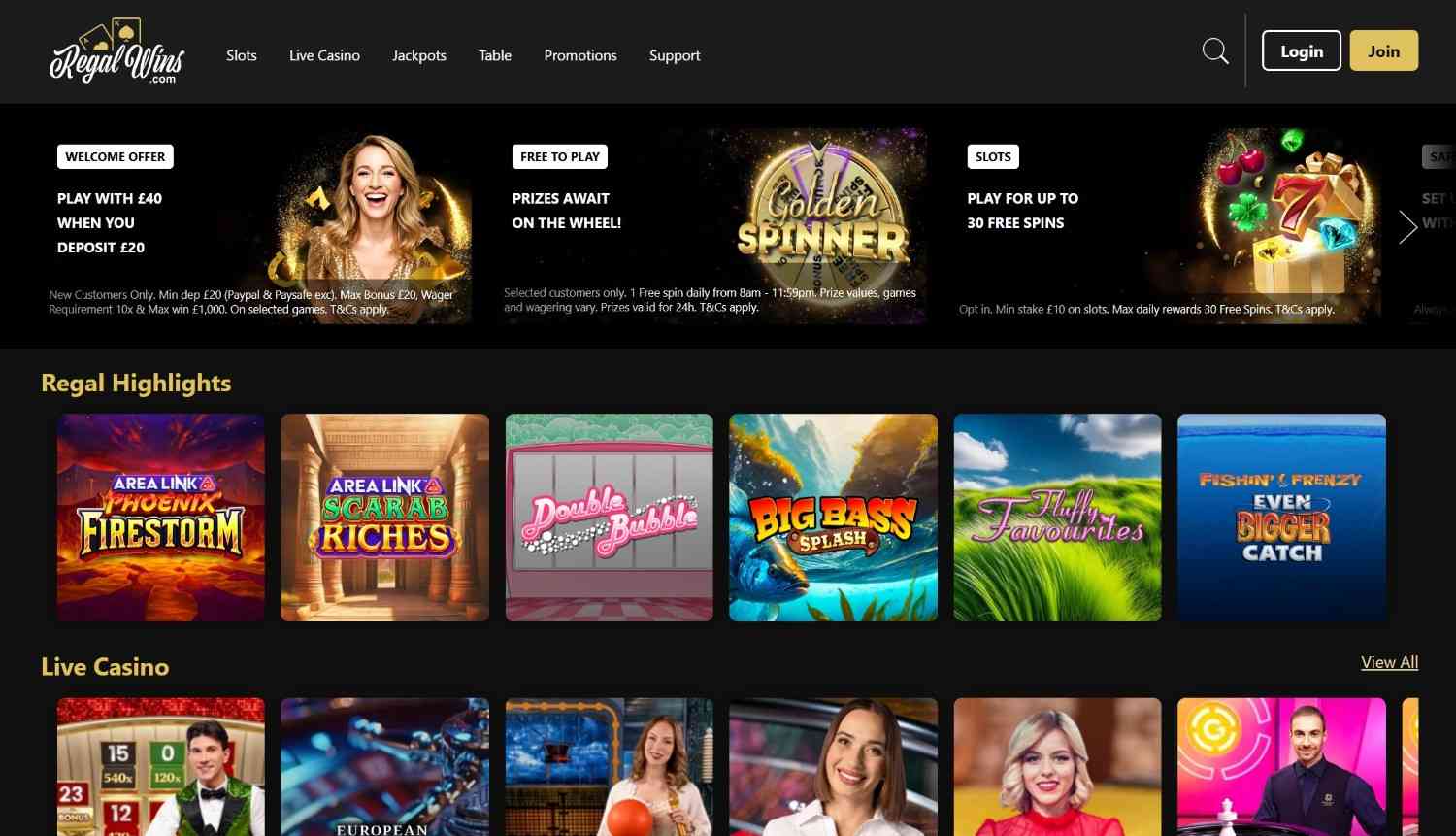
Regal Wins is not in the Happytiger ApS network; it is included as a verified alternative because Happy Tiger has only one confirmed same-operator sister. Its footer states that Regal Wins is operated by Rank Interactive (Gibraltar) Ltd and licensed in Great Britain by the Gambling Commission under account number 57924.
The site promotes a welcome bundle and bonusback-style promotions, but its live bonus terms should be checked before deposit. Unlike Happy Tiger’s current welcome terms, the captured Regal Wins page does not provide a single concise cash-match and wagering example in the visible body.
Regal Wins sister sites comparisons are most useful for live casino and table-game players. The site lists Evolution-style live formats, roulette, blackjack, baccarat, game shows and a large slot lobby. That is materially different from Happy Tiger’s proprietary bingo-and-slots positioning.
Trustpilot showed Regal Wins at 2.2 from 200 reviews in June 2026, with common criticism around withdrawals, bonus delivery and support. That does not override the UKGC licence, but it changes the risk profile for a player comparing Happy Tiger alternatives.
Regal Wins Snapshot
| Metric | Experience |
|---|---|
| Site Identity | Verified alternative; not a Happytiger ApS sister |
| Standout Mechanic | Live casino, table games and Rank-operated casino positioning |
| Game Edge | Wider live dealer and mainstream slot coverage than Happy Tiger |
| Payout Speed | Site states many withdrawals process within 10 minutes, subject to checks |
| The Trade-Off | Trustpilot sentiment is materially weaker than Happy Tiger |
| Best For | Players prioritising live casino variety over same-operator certainty |
Butlers Bingo – Strongest Sister Brand for Traditional Bingo Habits
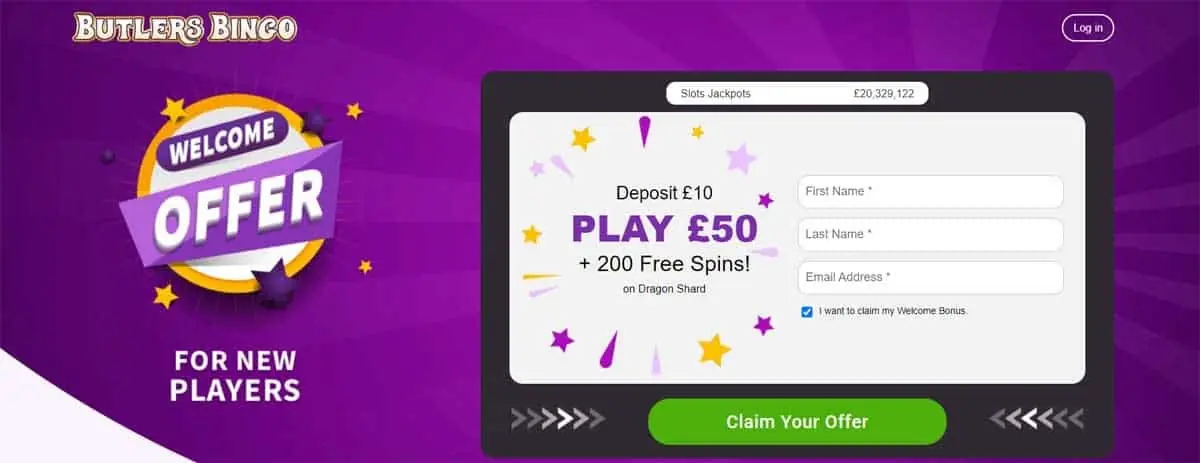
Butlers Bingo is profiled as a Happy Tiger alternative, not as a confirmed Happytiger ApS sister. At time of research, its homepage rendered but did not expose a crawlable footer in the captured page, so the article treats live operator details as requiring re-check before deposit.
The reason Butlers Bingo remains relevant is category fit. Happy Tiger casino UK players are often bingo-first rather than high-stakes table-game players, and Butlers Bingo has historically occupied the same casual bingo lane. That makes it a useful behavioural comparison even where same-operator status is not established.
Players looking for other sites like Zoe’s Bingo should compare Butlers Bingo on room schedule, ticket pricing, withdrawal rules and whether account controls are easy to find before registration. Do not assume its cashier or KYC process mirrors Happy Tiger.
The compliance conclusion is cautious: Players who find Butlers Bingo sister sites can sit in an alternatives set, but it should not be counted among confirmed Happy Tiger sister sites unless its current footer and regulator record are rechecked at the point of publication.
Butlers Bingo Snapshot
| Metric | Experience |
|---|---|
| Site Identity | Verified alternative; same-operator sister status unconfirmed at time of research |
| Standout Mechanic | Traditional bingo-led proposition |
| Game Edge | Expected bingo depth rather than proprietary Happy Tiger titles |
| Payout Speed | Not yet reported in directly captured terms |
| The Trade-Off | Footer evidence was not crawlable in the captured page |
| Best For | Players comparing Happy Tiger similar sites for bingo familiarity |
The Sun Vegas – Recommended Happy Tiger Casino Alternative for Media-Brand Familiarity
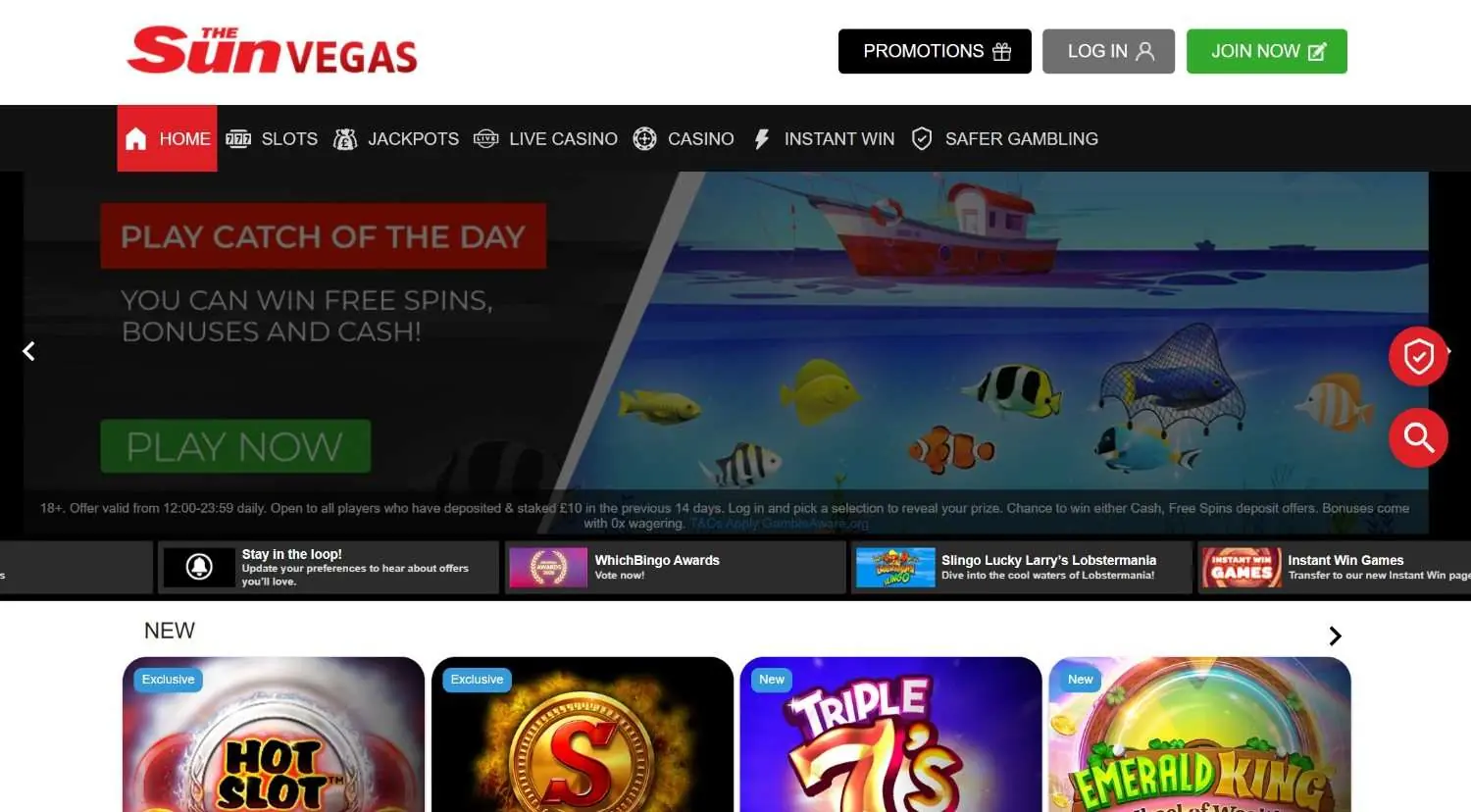
The Sun Vegas is included as a verified alternative rather than a confirmed Happy Tiger sister. The captured homepage was JavaScript-light and did not expose a full crawlable footer, so any live licence and bonus details should be checked on the site before registration.
Its comparison value is brand context. Happy Tiger is a relatively independent Danish-registered UKGC operator, while The Sun Vegas is a media-branded casino experience with broader mainstream recognition. That makes it a different risk and usability proposition for players who prefer familiar consumer brands.
The Sun Vegas sister sites should not be folded into Happytiger ApS sister sites. The safer editorial framing is to treat it as an alternative for players who want bingo, slots and promotional familiarity, not as evidence of a larger Happy Tiger casino sister casinos cluster.
For players comparing casinos like Dazn Bet, The Sun Vegas also shows why category labels matter: sportsbook-adjacent or media-led brands can look familiar, but operator, licence and account-control checks still need to happen before deposit.
The Sun Vegas Snapshot
| Metric | Experience |
|---|---|
| Site Identity | Verified alternative; same-operator sister status unconfirmed |
| Standout Mechanic | Media-brand familiarity and mainstream casino positioning |
| Game Edge | Likely broader third-party catalogue than Happy Tiger’s proprietary focus |
| Payout Speed | Not yet reported from captured source |
| The Trade-Off | Footer and bonus evidence should be refreshed manually before publication |
| Best For | Players wanting a Happy Tiger alternative with a familiar UK media brand |
How Happy Tiger Compares to Sites Like Happy Tiger
Sites like Happy Tiger usually compete on either bingo familiarity or large casino libraries. Happy Tiger does neither in the usual way: it positions itself around in-house games, low-stake casual play, bingo rooms and a proprietary entertainment feel. That makes Happy Tiger similar sites harder to benchmark than standard white-label casinos.
The verified sister count is the key finding. Among Happy Tiger sister sites, only Spin King is confirmed under the same Happytiger ApS UKGC account. By contrast, casinos similar to Betwright may sit in larger operator portfolios where multiple brands share tooling, support and payment policies.
Bonus structure is also unusually connected. Happy Tiger’s terms state one welcome bonus across happytiger.co.uk and spinking.co.uk, so the best Happy Tiger sister site cannot be judged by pretending each confirmed sister gives a fresh welcome package.
New Happytiger ApS Casinos in 2026
No new Happytiger ApS casinos beyond Happy Tiger and Spin King were directly verified at time of research. The Happy Tiger footer and current welcome terms name happytiger.co.uk and spinking.co.uk as the current same-licence brand set, which supports a thin-network conclusion rather than a padded list.
That is not a negative by itself. Some UKGC operators run small portfolios and keep compliance controls close. Players searching Happy Tiger alternatives should therefore separate confirmed same-operator evidence from broader category comparisons such as Admiral Casino alternatives, where the operator structure is unrelated.
Payment Methods Across the Network
Happy Tiger and Spin King publicly stress fast withdrawals, while the alternatives vary in how much cashier detail is visible before login. Payment availability can change after KYC, so treat this as a source-checked snapshot rather than a guarantee.
| Method | Deposit Speed | Withdrawal Speed | Min Deposit | Network Availability |
|---|---|---|---|---|
| Visa Debit | Usually instant | Often same day after checks | £10 to £20 depending on brand | Happy Tiger, Spin King, Double Bubble Bingo, Regal Wins |
| Mastercard | Usually instant | Often same day after checks | £10 to £20 depending on brand | Happy Tiger, Spin King, Double Bubble Bingo, Regal Wins |
| PayPal | Usually instant where offered | Often minutes to 24 hours after checks | Not consistently stated | Happy Tiger, Spin King and Regal Wins reported or stated |
| Apple Pay | Usually instant | Usually back to eligible underlying card | Not consistently stated | Happy Tiger and Double Bubble Bingo reported by third-party profiles |
| Google Pay | Usually instant | Usually back to eligible underlying card | Not consistently stated | Double Bubble Bingo reported by third-party profile |
| Paysafecard | Usually instant | Withdrawals require separate eligible method | Not consistently stated | Regal Wins stated |
| Bank transfer | Varies by bank | Varies by bank and checks | Not consistently stated | Happy Tiger reported by third-party profile |
Game Providers — Site-Level Comparison
Happy Tiger’s game mix is narrower but more proprietary, while the alternatives tend to rely on larger third-party catalogues. Players who find Happy Tiger sister sites should check whether they want exclusive bingo-style games or broader provider coverage.
| Site | Top 5 Providers | Total Game Count | Live Dealer Range | Mobile Browser |
|---|---|---|---|---|
| Happy Tiger | CEGO, Magnet Gaming, proprietary Happy Tiger titles, bingo titles, selected slots | Operator positions around 100 exclusive titles; Casino Guru lists limited categories | No major live range verified | Yes |
| Spin King | Pragmatic Play, NetEnt, Big Time Gaming, Nolimit City, in-house titles | Not yet reported as a verified count | Live gaming promoted but range not quantified | Yes |
| Double Bubble Bingo | Pragmatic Play, IGT, Scientific Games, Evolution, Blueprint | Casino Guru lists 13 provider groups, not a total game count | Casino Guru lists 7 available live categories | Yes |
| Regal Wins | NetEnt, Novomatic, Microgaming, Scientific Games, Evolution-style live titles | Trustpilot company profile states over 250 games | Broad roulette, blackjack, baccarat and game-show range | Yes |
| Butlers Bingo | Not yet reported from captured source | Not yet reported | Not yet reported | Expected, verify before deposit |
| The Sun Vegas | Not yet reported from captured source | Not yet reported | Not yet reported | Expected, verify before deposit |
Safety, Licensing and Regulation
Happy Tiger is a UKGC-regulated brand. The verified operator is Happytiger ApS, incorporated in Denmark at Lauritzens Plads 1, Aalborg, 9000, Denmark. The UKGC account number is 57641 and the operating licence reference is 057641-R-333524-007 for Remote Bingo and Casino, with active status verified on the public register.
The operator’s own footer states that Happytiger ApS is licensed and regulated in Great Britain by the Gambling Commission under account number 57641. Spin King’s footer states the same operator and account. This is the strongest evidence in the audit and is the basis for identifying Spin King as the only confirmed same-operator Happy Tiger sister site.
Happy Tiger sister companies should therefore be described carefully. Happytiger ApS sister sites means Happy Tiger and Spin King only at time of research; the other profiled brands are alternatives, not sister companies. Players comparing sites like The Sun Vegas should repeat the same footer-to-register check before depositing.
Responsible gambling controls visible across the Happy Tiger cluster include deposit limits, time-outs, self-exclusion through the UK national self-exclusion register route, support contact points and affordability-related account intervention language. UKGC consumer protections apply, but they do not remove the need to verify bonus terms, withdrawal rules and account identity checks before play.
Licence Reconciliation
No conflict was found between the pre-verified UKGC data and the Happy Tiger or Spin King footers. The key reconciliation point is not a conflict but a scope correction: third-party or affiliate-style lists may imply a larger network, while the operator’s current welcome terms name only happytiger.co.uk and spinking.co.uk as current Happytiger ApS brands.
For the four alternatives, same-operator status is not claimed. Double Bubble Bingo and Regal Wins had direct footer evidence for their own UKGC accounts. Butlers Bingo and The Sun Vegas require a fresh manual footer capture before publication because the crawlable pages did not expose full licence text in the captured output.
Safety and Licensing Summary
| Brand | Operator Entity | Licence Body | Licence Number | Entity Verified On | RG / Self-Exclusion |
|---|---|---|---|---|---|
| Happy Tiger | Happytiger ApS | UK Gambling Commission | 57641; 057641-R-333524-007 | UKGC register and operator footer | Limits, time-outs, self-exclusion route, support |
| Spin King | Happytiger ApS | UK Gambling Commission | 57641 | Operator footer and shared licence terms | Limits, reminders, self-exclusion route, support |
| Double Bubble Bingo | Gamesys Operations Limited | UK Gambling Commission | 38905 | Operator footer | Responsible gambling hub and account controls |
| Regal Wins | Rank Interactive (Gibraltar) Ltd | UK Gambling Commission | 57924 | Operator footer | Net deposit limits, take a break, self-exclusion, reality check |
| Butlers Bingo | Not directly captured | Reported UKGC alternative; verify live | Not yet reported from captured source | Footer not crawlable in captured page | Verify live before deposit |
| The Sun Vegas | Not directly captured | Reported UKGC alternative; verify live | Not yet reported from captured source | Captured homepage did not expose full footer | Verify live before deposit |
Evidence Checked — Source Transparency
The table separates direct operator evidence from third-party sentiment. Licensing claims are strongest where the operator footer and UKGC account data align; sentiment and safety scores are treated as time-stamped indicators, not licensing proof.
| Brand | Licence (source) | Bonus Terms (source) | Game Count (source) | Sentiment (source + date) | Casino Guru Safety Index (source + date) |
|---|---|---|---|---|---|
| Happy Tiger | UKGC account 57641; operator footer | Homepage terms, June 2026 | Operator says around 100 exclusive titles; Casino Guru lists limited categories | Trustpilot 4.1 from 3,176 reviews, June 2026 | 9.5 Very High, April 2026 |
| Spin King | Operator footer: Happytiger ApS, UKGC 57641 | Shared Happytiger ApS welcome-offer terms | Not yet reported as a verified count | Trustpilot 3.3 from 103 reviews, June 2026 | Not yet reported |
| Double Bubble Bingo | Operator footer: Gamesys Operations Limited, UKGC 38905 | Homepage offer rules, June 2026 | Casino Guru lists 13 provider groups | Trustpilot profile not reliably captured; use live check | 8.9 High, March 2026 |
| Regal Wins | Operator footer: Rank Interactive (Gibraltar) Ltd, UKGC 57924 | Homepage promotional copy, June 2026 | Trustpilot company profile states over 250 games | Trustpilot 2.2 from 200 reviews, June 2026 | Not yet reported |
| Butlers Bingo | Footer not crawlable in captured page | Not yet reported | Not yet reported | Not yet reported | Not yet reported |
| The Sun Vegas | Footer not crawlable in captured page | Not yet reported | Not yet reported | Not yet reported | Not yet reported |
What Users Say and Common Complaints
Happy Tiger sentiment is stronger than most thin-network audits usually show. Trustpilot captured 4.1 from 3,176 reviews in June 2026, with frequent praise for unique games, site layout and fast withdrawals. The recurring negatives were minimum-deposit friction, perceived low returns, bonus dissatisfaction and occasional withdrawal-support issues.
Spin King sentiment is more mixed. Trustpilot showed 3.3 from 103 reviews in June 2026, with players praising fast payout experiences but criticising bonus value and perceived loss rates. That is important because Spin King is the only confirmed route for players who want to find Happy Tiger sister sites under the same operator.
Players comparing Happy Tiger alternatives with casinos like Betwright should treat complaint patterns as early-warning signals rather than final verdicts. A UKGC licence gives escalation routes, but it does not prevent delays where KYC, payment ownership or bonus-rule checks are triggered.
| Source | Common Praise | Common Criticism |
|---|---|---|
| Trustpilot, June 2026 | Happy Tiger: 4.1 from 3,176 reviews; fast withdrawals and unique games. Spin King: 3.3 from 103 reviews; some quick-payout praise. | Withdrawal support friction, low perceived returns, bonus disappointment. |
| Casino Guru, March-April 2026 | Happy Tiger Safety Index 9.5; Double Bubble Bingo Safety Index 8.9. | Happy Tiger has limited game range; some profiles have insufficient user-review data. |
| Not yet reported in a reliable brand-specific thread set. | Not yet reported. | |
| AskGamblers | Not yet reported from captured brand pages. | Not yet reported. |
Bonus, Wagering and No-Deposit Availability at Happy Tiger
Happy Tiger’s current welcome example is unusually clear. A £20 deposit creates a £20 bonus, so the combined £40 balance must be wagered 10x on selected slots, producing £400 turnover before bonus withdrawal. If played entirely on bingo with 200% contribution, the effective wagering falls to £200. For a £100 deposit matched to £100, the selected-slot turnover becomes £2,000. The current UKGC 10x cap under Social Responsibility Code 5.1.1 from 19 January 2026 makes this structure important: Happy Tiger states 10x on deposit plus bonus for selected slots and an effective 5x route on bingo.
No Happy Tiger sister sites no deposit bonus was verified in the captured Happy Tiger or Spin King terms. The live offer is deposit-led, requires opt-in, has a £20 minimum deposit, a 30-day wagering window, excluded games, and a £300 cap on bonus-fund winnings except stated jackpot and bingo exceptions.
Which Happy Tiger Sister Site Is Best?
Among the 1 confirmed/profiled sister sites of Happy Tiger, Spin King is the best Happy Tiger sister site for most players. The reason is evidential, not promotional: Spin King is the only brand directly tied to Happytiger ApS and UKGC account 57641, so it is the only confirmed answer when a player asks for sister sites of Happy Tiger.
If the goal is broader choice rather than same-operator certainty, Double Bubble Bingo is the strongest bingo-led alternative and Regal Wins is the stronger live-casino comparison. Players comparing Happy Tiger alternatives with other sites like Admiral Casino should start with the footer, then the regulator account, then bonus rules, then complaints.
The practical advice is simple: use Happy Tiger sister sites only where the same operator is confirmed, assume one welcome offer across Happy Tiger and Spin King, and do not deposit until KYC, withdrawal method ownership, wagering rules and safer-gambling controls are understood. The sister sites of Happy Tiger are thin, and that is preferable to inventing a network that does not exist.
If you experience difficulties with gambling, support is available. Contact GamCare (freephone 0808 8020 133) for confidential help, or visit GambleAware for additional resources.