
Mega Casino Sister Sites: 5 Alternatives & Similar Casinos Reviewed
This forensic audit examines the operator structure, licensing framework and cross-network behaviour of Mega Casino’s sister brands. We investigate the Skill On Net Limited entity, its UK Gambling Commission licence, five same-account sister casinos, and one non-Skill On Net UK-licensed alternative for a like-for-like comparison.

About Skill On Net Limited
Mega Casino is operated by Skill On Net Limited, a Cyprus-headquartered company registered at Anapafseos 1, Limassol 3096, Cyprus, holding UK Gambling Commission account 39326 continuously since November 2014. The company was founded in Cyprus in 2005 with additional offices in Malta and the UK. The account carries an active Remote Casino Licence (reference 039326-R-319358-054) with additional Gambling Software and Bingo permissions, and the same account also holds a Malta Gaming Authority licence for European coverage. UK-facing operations across every profiled sister brand run under this single UKGC account.
The Skill On Net register footprint is one of the largest in the UK market. Independent third-party trackers place total active domains on account 39326 at around 59 sister sites — a materially larger estate than most single-operator UK networks. Every profiled brand sits on the same account and inherits the same regulatory obligations, funds-protection tier, dispute-resolution route and network-wide self-exclusion behaviour.
Skill On Net casinos share the same underlying platform infrastructure, cashier stack and provider aggregator, which means the product mechanics are genuinely consistent across the estate. Where the brands differ is in visual identity, bonus structure, and the specific slice of the game catalogue each site chooses to surface. Mega Casino sits toward the volume-heavy end of that spectrum with a headline library of around 9,000 titles.
Mega Casino Sister Sites at a Glance
The table below sets Mega Casino next to the five same-account brands profiled in the sections that follow, and forms the reference grid for any Skill On Net Limited sister sites comparison. All six brands share the same UKGC account 39326, the same Malta corporate parent and the same 10x wagering base on new welcome bonuses — the UK regulator’s mandatory cap on new promotions effective from 19 January 2026. Where they differentiate is in launch age, headline welcome mechanic and the visual product identity each brand chooses to lead with.
Comparison at a Glance
| Sister Site | Launch Year | Licence | Welcome Bonus | Standout Feature |
|---|---|---|---|---|
| Mega Casino | 2010 (current branding since 2013) | UKGC 39326 (Skill On Net Ltd) | 100% up to £25 + 50 free spins on Big Bass Bonanza, or 125 free spins on Big Bass Splash | Volume-heavy library at around 9,000 titles with dual Evolution and Pragmatic Play Live floors |
| PlayOJO | 2017 | UKGC 39326 (Skill On Net Ltd) | 50 free spins on Big Bass Bonanza on £10 first deposit, winnings paid as cash | Genuinely wager-free flagship — no wagering requirement on any spin winnings |
| Prime Casino | May 2005 (Skill On Net since 2020) | UKGC 39326 (Skill On Net Ltd) | 100% up to £25 + 50 free spins, alt 155 free spins | Longest continuously operating casino in the UK market at over twenty years live |
| SpinGenie | 2020 | UKGC 39326 (Skill On Net Ltd) | 108-120 free spins on first deposit of £10+, plus a 10 no-deposit spins layer for selected players | Lighter, more casual presentation with a free-spins-forward welcome structure |
| PlayMillion | 2013 (Skill On Net since launch) | UKGC 39326 (Skill On Net Ltd) | 100% up to £25 first deposit with 10x wagering on bonus | Established casino-heritage brand with a plain-vanilla lobby and older-catalogue appeal |
| Simba Games | 2014 | UKGC 39326 (Skill On Net Ltd) | 25 no-deposit spins on Starburst for selected players; standard 100% deposit-match welcome | Mascot-led lion-themed identity with an animated, character-forward lobby |
PlayOJO – Best Mega Casino Sister Site for Wager-Free Bonus Terms
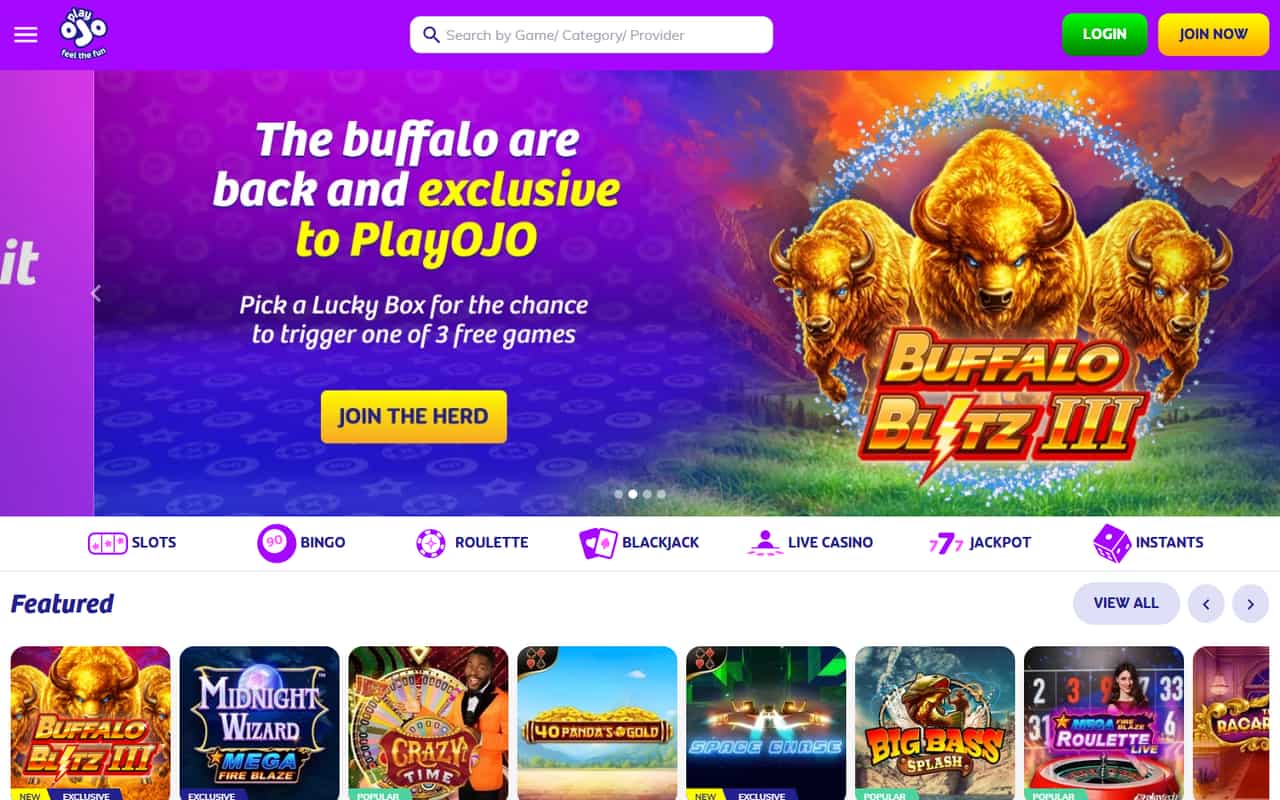
PlayOJO is the highest-profile brand on the Skill On Net Limited account and the sister site most likely to appear alongside Mega Casino in any UK-facing best-of-network comparison. Launched in 2017, PlayOJO has built its entire product positioning around a genuinely wager-free bonus model — spin winnings pay out as cash rather than as bonus funds with a wagering multiplier attached. That is a materially different structural approach from Mega Casino’s traditional 10x-wagering welcome and is the single specific reason PlayOJO earns the top-of-network profile slot in a UK reader-facing forensic audit.
The current welcome offer is 50 free spins on Big Bass Bonanza on a first deposit of £10 or more, each spin valued at £0.10, with every penny of winnings withdrawable as cash the moment they credit. PlayOJO is the only Skill On Net Limited brand that treats no-wagering as the flagship structural mechanic on the front page. Casinos similar to Nitro Casino on separate UKGC operator entities publish comparable no-wagering variants but do not match PlayOJO’s OJOplus real-cash rebate layer.
Provider coverage at PlayOJO runs from Pragmatic Play, NetEnt, Evolution, Play’n GO, Red Tiger, Big Time Gaming and Yggdrasil across the front-line catalogue, with a lighter provider tail than the volume-first Mega Casino approach. Live-dealer coverage runs on the shared Skill On Net Evolution and Pragmatic Play Live integrations. The OJOplus rebate — a small percentage cash-back paid on every real-money wager whether the outcome is winning or losing — is the specific mechanic that keeps PlayOJO players inside the wager-free positioning across a full session.
PlayOJO Review
| Metric | The PlayOJO Experience |
|---|---|
| Operator | Skill On Net Limited, Cyprus — same as Mega Casino |
| Licence | UKGC account 39326 held continuously since November 2014 |
| Safety Index | Strong third-party safety scoring with the highest reviewer sample on the Skill On Net Limited estate |
| Player Sentiment | Positive on the wager-free mechanic and OJOplus rebate; caveats on KYC turnaround at higher stake tiers |
| Welcome Offer | 50 free spins on Big Bass Bonanza on £10 first deposit, winnings paid as cash with no wagering attached |
| Standout Feature | Genuinely wager-free flagship — the only Skill On Net Limited brand that treats no-wagering as the structural welcome |
Prime Casino – Best Mega Casino Alternative for UK Casino Longevity
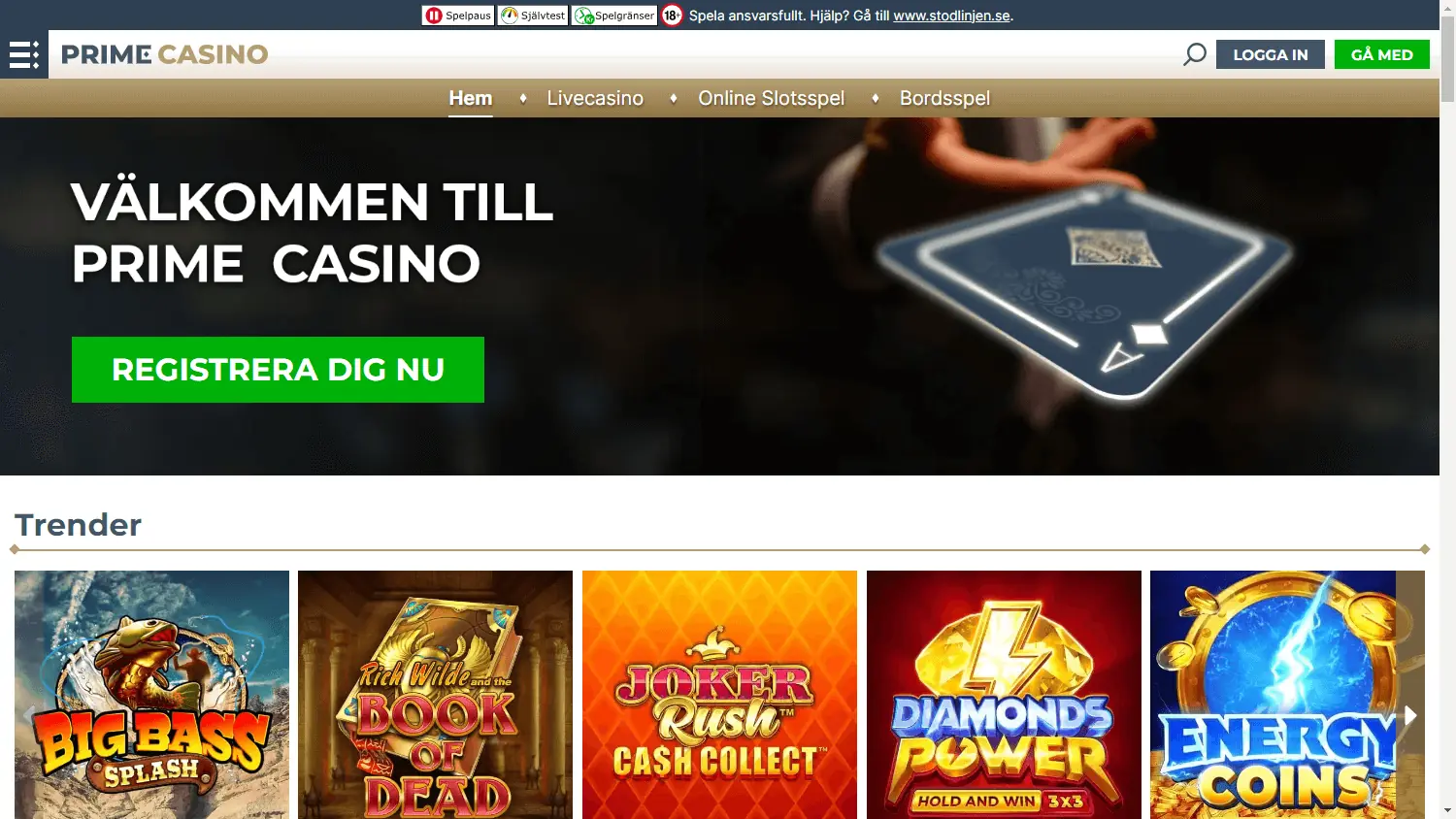
Prime Casino sister sites analysis has to start with a fact that is easy to overlook in a network of newer launches: Prime Casino has been trading online in Great Britain since May 2005, and independent third-party trackers describe it as one of the longest continuously operating casinos in the UK market. Skill On Net Limited took over management of the brand in 2020 under a Prime Gaming handover, but the twenty-plus-year operational tenure and the accumulated player-relationship reputation predate the current operator and remain a distinctive selling point of the brand’s positioning today.
The current welcome offer at Prime Casino follows the same well-structured Skill On Net template that Mega Casino uses — a 100% deposit match up to £25 with 50 free spins, or an alternative 155 free spins for players who prefer a spins-only route. The 10x wagering base and slots-only qualification apply across both formats, and the 30-day wagering window matches what Mega Casino publishes. Casinos like Almabet on separate UKGC operator accounts publish comparable low-wagering welcomes but do not match Prime Casino’s tenure or its 7,000-plus catalogue depth.
The game library covers approximately 7,000 titles across slots, live casino, table games, crash games, Slingo, jackpots and video poker, with no sports betting or bingo verticals. Find Prime Casino sister sites across the wider network for same-account brands on the shared provider stack.
Prime Casino Review
| Metric | The Prime Casino Experience |
|---|---|
| Operator | Skill On Net Limited, Cyprus — same as Mega Casino |
| Licence | UKGC 039326-R-319358-054 under account 39326 |
| Safety Index | Mid-to-high tier third-party safety scoring with a long operating record |
| Player Sentiment | Positive on operational longevity and catalogue depth; older-brand aesthetic not universally liked |
| Welcome Offer | 100% up to £25 + 50 free spins on Big Bass Bonanza, or alternative 155 free spins |
| Standout Feature | Trading online in the UK since May 2005 — longest tenure of any profiled Skill On Net Limited brand |
SpinGenie – Top Pick in the Skill On Net Limited Network for Lighter Promotional Feel
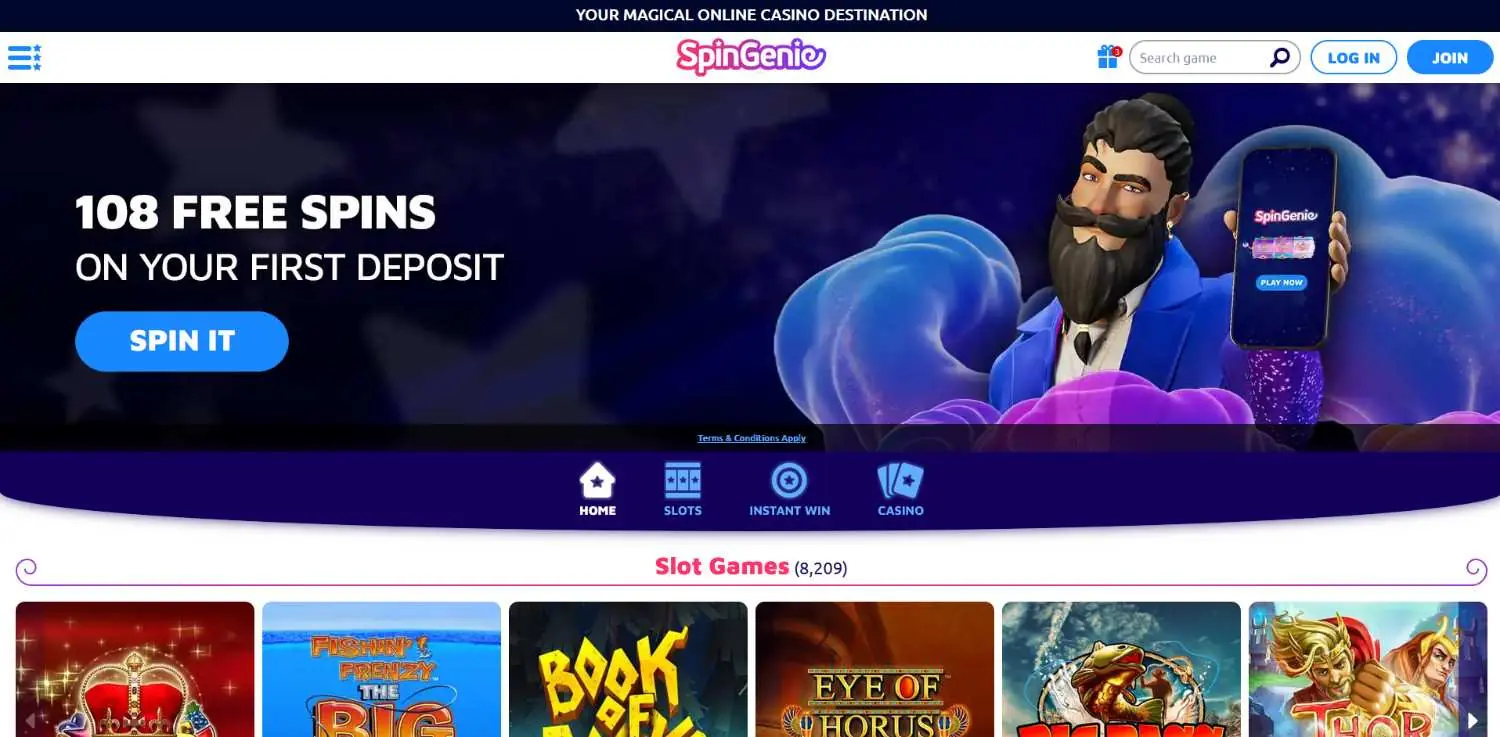
SpinGenie launched under Skill On Net Limited in 2020 as one of the network’s newer brand identities, and its positioning is deliberately lighter and more casual than the volume-first Mega Casino approach. The magic-and-genie visual identity carries into the lobby architecture — spin-forward promotions, a Daily Picks bonus wheel, and a free-spins-heavy welcome structure rather than a fixed cash match. The result is a Skill On Net Limited brand that reads noticeably less serious than Prime Casino or PlayMillion and appeals to a different player profile.
The current welcome offer is reported at 108-120 free spins on Book of Dead credited on a £10 first deposit, with a 10x wagering multiplier applied to spin winnings and slots-only qualification. A separate 10 no-deposit free spins layer on Starburst is available to selected players via specific affiliate routes — the no-deposit component is genuinely no-deposit but restricted to invited traffic rather than universally available. Sites like SpinGenie across the wider Skill On Net network follow this free-spins-forward welcome shape rather than the Mega Casino cash-match template. Sites like Kaiser Slots on separate UKGC operator accounts publish comparable spins-first welcomes.
Game coverage exceeds 1,500 slots and instant-win titles including Slingo Rainbow Riches, Monopoly Big Event, Book of Dead, Starburst, Fishin’ Frenzy and Mega Moolah / Mega Fortune progressives — smaller than Mega Casino’s 9,000-plus library but more curated toward the slots-first direction.
SpinGenie Review
| Metric | The SpinGenie Experience |
|---|---|
| Operator | Skill On Net Limited, Cyprus — same as Mega Casino |
| Licence | UKGC account 39326 held under Bingo, Casino and Gambling Software permissions |
| Safety Index | Mid-tier third-party safety scoring with a Trustpilot sample around 1,500 reviews |
| Player Sentiment | Positive on the lighter promotional style and jackpot network access; smaller catalogue is a limitation for volume players |
| Welcome Offer | Reported 108-120 free spins on Book of Dead on £10 first deposit at 10x wagering, plus 10 no-deposit spins for selected players |
| Standout Feature | Casual, spin-forward magic-themed lobby — the network’s most-lightly-positioned brand |
PlayMillion – Strongest Sister Brand for Established Casino Heritage
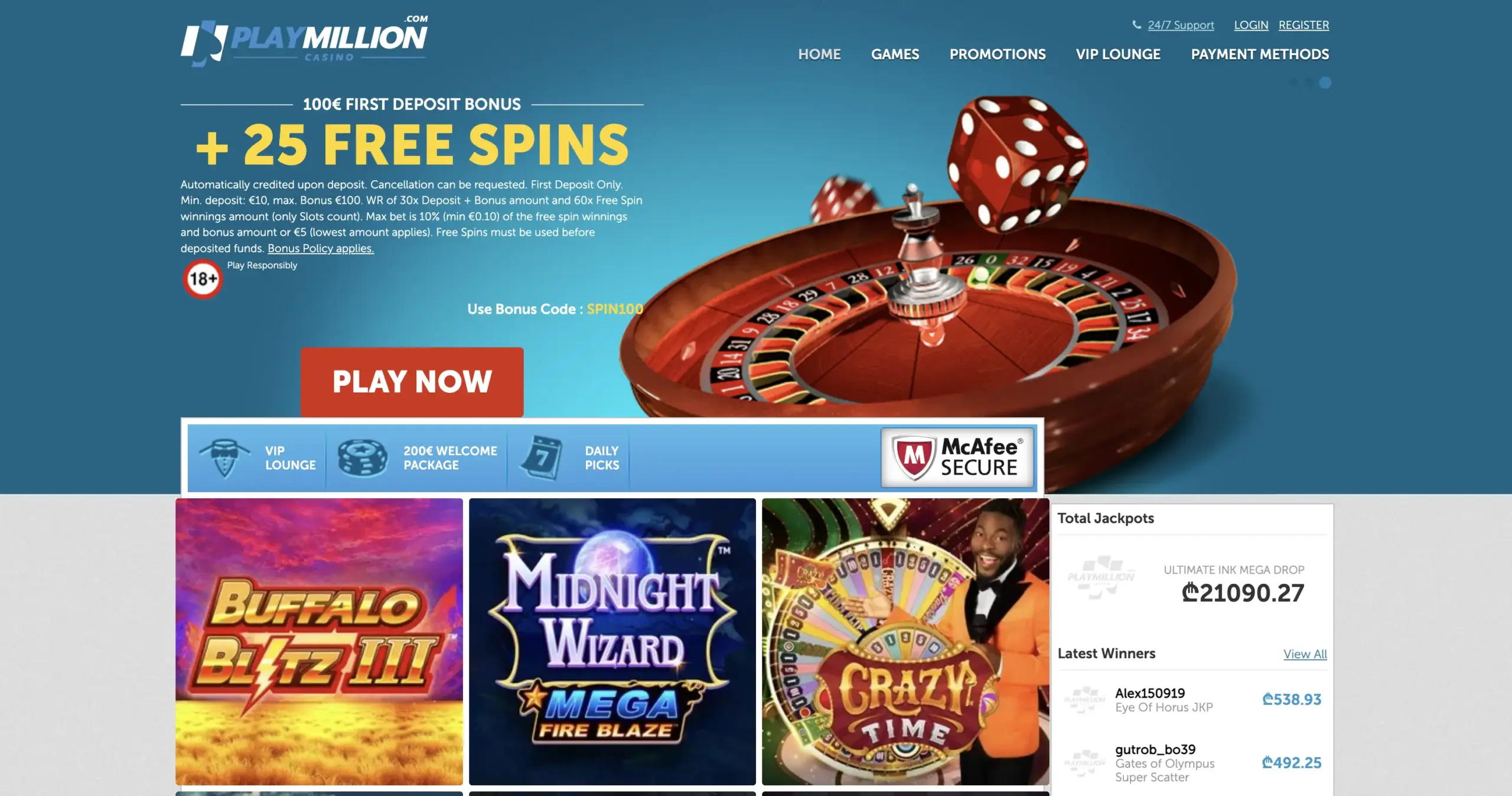
PlayMillion launched under Skill On Net Limited in 2013 and has traded continuously as a straight-forward casino brand since. It sits alongside Prime Casino as one of the network’s longer-tenure identities, though PlayMillion’s positioning is less prestige-focused and more workmanlike — a plain-vanilla casino brand for players who want a low-friction lobby without the aesthetic overhead of a themed or gamified experience.
The current welcome offer at PlayMillion mirrors the Skill On Net template Mega Casino uses — a 100% first-deposit match up to £25 with the 10x wagering base and slots-only qualification. The offer is smaller than what some larger UKGC operators can afford to run at the same wagering ceiling, but the low wagering multiplier keeps the practical value close to what a headline cash-match figure would deliver at 30x or 40x under the pre-January 2026 regulatory regime. Find PlayMillion sister sites across the wider Skill On Net Limited estate for other same-account brands with the same welcome template. Wildz alternatives on separate UKGC operator entities publish comparable heritage-brand welcomes but do not share operator, licence or funds-protection tier with the Skill On Net Limited estate.
Game coverage sits toward the middle of the network — smaller than Mega Casino’s 9,000-title library and Prime Casino’s 7,000-plus range, larger than SpinGenie. Provider identity is the shared Skill On Net stack of Pragmatic Play, NetEnt, Evolution, Play’n GO, BGaming and Red Tiger.
PlayMillion Review
| Metric | The PlayMillion Experience |
|---|---|
| Operator | Skill On Net Limited, Cyprus — same as Mega Casino |
| Licence | UKGC account 39326 held continuously since November 2014 |
| Safety Index | Mid-tier third-party safety scoring with a smaller reviewer sample than Prime Casino or PlayOJO |
| Player Sentiment | Positive on lobby simplicity and payout reliability; less discussed in third-party threads than the flagship brands |
| Welcome Offer | 100% up to £25 first deposit with 10x wagering on bonus, £10 minimum, slots-only qualification |
| Standout Feature | Plain-vanilla casino heritage brand since 2013 — the network’s least-themed identity |
Simba Games – Recommended Mega Casino Alternative for Mascot-Led Personality
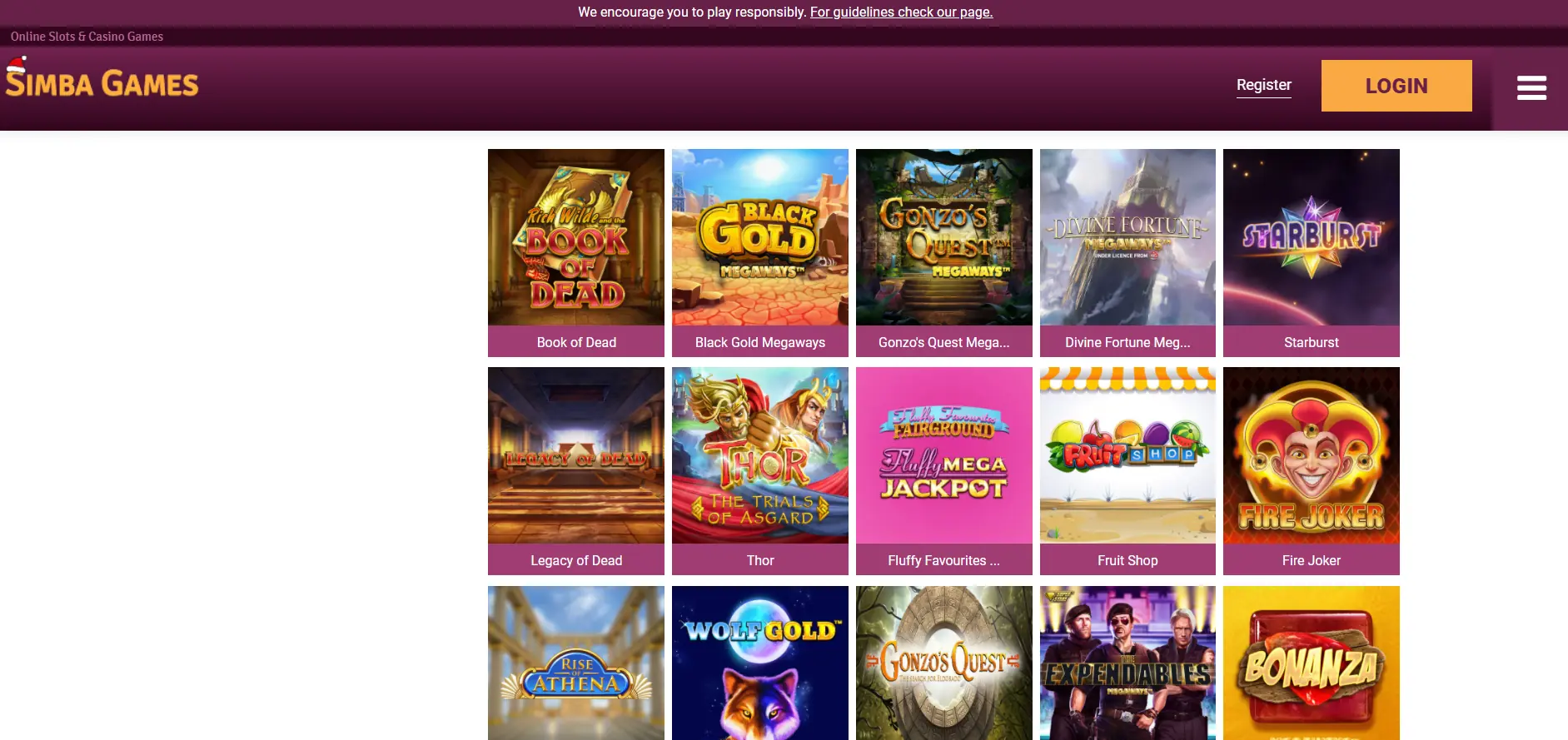
Simba Games has been on the Skill On Net Limited account since around 2014 and differentiates itself in a network of otherwise plain-lobby brands through a mascot-led identity built around a lion character. The visual approach is deliberately animated and character-forward — a specific product choice that appeals to players who find the volume-first Mega Casino approach and the workmanlike PlayMillion lobby too impersonal, and who value a brand with a defined visual personality rather than a spreadsheet-style game grid.
The reported welcome package at Simba Games includes a 25 no-deposit free spins layer on Starburst for selected players routed through specific affiliate paths, followed by a standard 100% first-deposit match up to £25 with the shared 10x wagering base and slots-only qualification. The no-deposit component is genuinely no-deposit but is restricted to invited traffic — a common Skill On Net Limited network pattern that also applies to SpinGenie and Prime Casino no-deposit variants. Mr Wolf Casino alternatives on separate UKGC operator entities publish comparable no-deposit-plus-match welcomes but do not share the underlying same-account operator continuity.
Game coverage sits in the same range as PlayMillion with the front-line studios of Pragmatic Play, NetEnt, Evolution and Play’n GO carrying the load and Evolution running the live floor. The brand’s positioning is personality-first rather than catalogue-first — readers who want the largest possible game library are better served by Mega Casino itself.
Simba Games Review
| Metric | The Simba Games Experience |
|---|---|
| Operator | Skill On Net Limited, Cyprus — same as Mega Casino |
| Licence | UKGC account 39326 held continuously since November 2014 |
| Safety Index | Mid-tier third-party safety scoring with a smaller reviewer sample than the flagship brands |
| Player Sentiment | Positive on mascot personality and no-deposit route; the lion-costume aesthetic is not universally admired |
| Welcome Offer | 25 no-deposit spins on Starburst for selected players plus 100% match up to £25 at 10x wagering |
| Standout Feature | Mascot-led lion-themed identity — the network’s only character-forward brand |
Banking and Payments Across the Network
The cashier stack across the six Skill On Net Limited brands is genuinely uniform because every site runs on the same underlying platform and payments are processed through the shared corporate Cyprus infrastructure. UK players who deposit will see the operator entity reference in their transaction descriptor rather than the front-of-house brand name. Fiat rails cover Visa and Mastercard debit, PayPal, Skrill, Neteller, Trustly, Apple Pay and standard bank transfer across every profiled brand. The network does not offer crypto rails on any UKGC-facing property, which is a UK-licensing-standard restriction rather than a Skill On Net Limited operator choice.
Payout speed varies per brand rather than being uniform, and any claim that Skill On Net Limited sites process withdrawals on a shared timetable does not survive first-party checks. Third-party reviews report PayPal withdrawals inside one to six hours across most Skill On Net brands where KYC is complete, Skrill and Neteller at one to twenty-four hours, Trustly at a few hours to two business days, and debit card and Apple Pay withdrawals at three to five business days. Sister sites of Mega Casino cross-referenced against sites like Space Casino on separate UKGC operator accounts show broadly similar payout ranges for the same payment method.
Payment Methods
| Sister Site | Deposit Options | Withdrawal Options | Min Deposit | Payout Speed |
|---|---|---|---|---|
| Mega Casino | Visa, Mastercard, PayPal, Skrill, Neteller, Trustly, Apple Pay, bank transfer | Same set; PayPal and Trustly fastest | £10 | PayPal 1–6 hours; card 3–5 business days |
| PlayOJO | Visa, Mastercard, PayPal, Skrill, Neteller, Trustly, Apple Pay, bank transfer | Same set as deposit list | £10 | PayPal 1–6 hours; card 3–5 business days |
| Prime Casino | Visa, Mastercard, PayPal, Skrill, Neteller, Trustly, Apple Pay, bank transfer | Same set as deposit list | £10 | PayPal 1–6 hours; card 3–5 business days |
| SpinGenie | Visa, Mastercard, PayPal, Skrill, Neteller, Trustly, bank transfer | Same set as deposit list | £10 | PayPal 1–6 hours; card 3–5 business days |
| PlayMillion | Visa, Mastercard, PayPal, Skrill, Neteller, Trustly, bank transfer | Same set as deposit list | £10 | PayPal 1–6 hours; card 3–5 business days |
| Simba Games | Visa, Mastercard, PayPal, Skrill, Neteller, Trustly, bank transfer | Same set as deposit list | £10 | PayPal 1–6 hours; card 3–5 business days |
Games and Software
The game library behind every Skill On Net Limited brand is a shared provider stack sourced from the same aggregator relationships. Pragmatic Play, NetEnt, Evolution, Play’n GO, BGaming, Red Tiger, Big Time Gaming and Yggdrasil carry the front-line slot and live-dealer load across every profiled site, joined by a long tail of secondary studios including Nolimit City, Push Gaming, Hacksaw Gaming, Blueprint, Relax Gaming, ELK and Thunderkick. Live dealer runs on the Evolution and Pragmatic Play Live dual-integration — the strongest live-floor combination available in the UK market and identical to what a player would see at any major UK-licensed operator. Reported title counts vary meaningfully by brand and by how each site categorises Slingo, instant-win and Megaways formats.
Mega Casino publishes the largest catalogue in the network at around 9,000 titles combined, ahead of Prime Casino at 7,000-plus and PlayMillion in the mid-thousands. SpinGenie sits deliberately lower at around 1,500 slots and instant-win titles as part of its slots-first curation, and Simba Games clusters in a similar mid-range. Casinos similar to Glossy Bingo on separate UKGC operator accounts show narrower provider tails at similar catalogue scale.
Game Providers
| Sister Site | Leading Providers | Approx. Game Count | Live Casino (Y/N) |
|---|---|---|---|
| Mega Casino | Pragmatic Play, NetEnt, Evolution, Play’n GO, BGaming, Red Tiger, Blueprint | Around 9,000 titles | Y (Evolution + Pragmatic Play Live) |
| PlayOJO | Pragmatic Play, NetEnt, Evolution, Play’n GO, Red Tiger, Big Time Gaming, Yggdrasil | 4,000+ titles | Y (Evolution + Pragmatic Play Live) |
| Prime Casino | Pragmatic Play, NetEnt, Evolution, Play’n GO, BGaming, Red Tiger, Blueprint, Relax Gaming | Over 7,000 titles | Y (Evolution + Pragmatic Play Live) |
| SpinGenie | Pragmatic Play, NetEnt, Evolution, Play’n GO, Blueprint, Barcrest | Around 1,500 slots and instant-win titles | Y (Evolution) |
| PlayMillion | Pragmatic Play, NetEnt, Evolution, Play’n GO, BGaming, Red Tiger | Mid-thousands | Y (Evolution) |
| Simba Games | Pragmatic Play, NetEnt, Evolution, Play’n GO, BGaming | Mid-thousands | Y (Evolution) |
Licensing and Player Protection
The licensing picture for Mega Casino sister companies is genuinely clean at the register level. Every profiled brand sits on Skill On Net Limited’s UKGC account 39326, held continuously since November 2014, with the corresponding remote casino licence 039326-R-319358-054 and additional bingo and gambling-software permissions. UK players deposit under the full UK regulatory perimeter: segregated player funds at the UKGC-classified protection tier, mandatory 10x wagering cap on new welcome promotions effective from 19 January 2026, UK-recognised Alternative Dispute Resolution route, and network-wide self-exclusion across every brand on the account.
A player who self-excludes at Mega Casino is automatically excluded from PlayOJO, Prime Casino, SpinGenie, PlayMillion, Simba Games and every other Skill On Net Limited brand on account 39326 — the exclusion travels with the operator account rather than the individual brand. This is a structural consumer-protection advantage of a same-account sister network versus a same-platform-different-operator network.
A documented regulatory action against the Skill On Net Limited account sits inside the current audit window and needs surfacing directly. The Gambling Commission announced a £305,150 payment in lieu of a financial penalty against Skill On Net Limited on 23 May 2023 (including £105,650 in divestment of proceeds tied to specific customer accounts), alongside £9,079 in costs and a mandatory independent third-party audit. The action covered breaches of Licence Conditions 12.1.1 and 12.1.2 (anti-money-laundering) and social responsibility code provisions during the period January 2021 to December 2022. The action sits approximately 40 months back from the current audit window and is documented rather than active — no further enforcement has been recorded against Skill On Net Limited on account 39326 in the intervening period. The practical implication for UK players today is standard enhanced KYC on higher-stake withdrawals across the network — a common post-enforcement pattern rather than a brand-specific caution.
Licensing Details
| Sister Site | Licensing Authority | Licence Number | Operator Entity |
|---|---|---|---|
| Mega Casino | UK Gambling Commission | Account 39326 (Remote Casino 039326-R-319358-054) | Skill On Net Limited, Cyprus |
| PlayOJO | UK Gambling Commission | Account 39326 | Skill On Net Limited, Cyprus |
| Prime Casino | UK Gambling Commission | Account 39326 | Skill On Net Limited, Cyprus |
| SpinGenie | UK Gambling Commission | Account 39326 | Skill On Net Limited, Cyprus |
| PlayMillion | UK Gambling Commission | Account 39326 | Skill On Net Limited, Cyprus |
| Simba Games | UK Gambling Commission | Account 39326 | Skill On Net Limited, Cyprus |
What Players Say
Sentiment across the Skill On Net Limited estate follows a consistent pattern rather than a per-brand story, which is itself a network-level signal worth naming when comparing Mega Casino sister sites side by side. Small and mid-stake UK players report positive experiences across every profiled brand: live-chat response times are reasonable, PayPal withdrawals credit reliably where KYC is complete, and the range of Skill On Net Limited loyalty and gamification features holds attention. Sentiment turns more negative at higher-stake tiers where the enhanced KYC pattern begins — a common industry pattern across UK-licensed operators rather than a Skill On Net-specific issue.
PlayOJO carries the largest independent review sample in the network and clusters in the higher tier of third-party safety scoring on the strength of its no-wagering positioning and low complaint volume relative to player base. Prime Casino sits in the mid-to-high tier on the strength of its twenty-year tenure. SpinGenie carries a mid-tier Trustpilot sample of around 1,500 reviews with a broadly positive skew. PlayMillion and Simba Games attract less third-party discussion — both are smaller-audience brands within the network. Mega Casino itself sits in the mid-tier on the strength of catalogue breadth but attracts occasional criticism on customer support depth relative to its size. Find Hidden Jack sister sites analysis on separate UKGC operator entities for a like-for-like sentiment comparison outside the Skill On Net Limited network.
Complaints escalation across every profiled brand follows the standard UK route: brand-level complaints handling first, then escalation to an approved UK-recognised Alternative Dispute Resolution provider, then referral of unresolved matters to the Gambling Commission for regulatory intelligence purposes. UK players who require enhanced ADR cover before depositing find casinos like Rabbit Win Casino on separate UKGC operator entities and other domestic operators on comparable footing.
Sentiment Grid
| Sister Site | Trustpilot Score | Positive Themes | Common Complaints | Overall Sentiment |
|---|---|---|---|---|
| Mega Casino | Mid-tier sample; positive skew on library breadth | Around 9,000 titles; dual Evolution and Pragmatic Play Live floors; low wagering welcome | Customer support depth relative to network size; £25 welcome cap limits higher-depositor appeal | Mixed with a positive tilt for volume-first players |
| PlayOJO | Largest independent review sample in the network; positive skew | Wager-free welcome and OJOplus rebate; strong safety indices; low complaint volume | KYC turnaround on higher-stake withdrawals | Broadly positive with the network’s strongest safety profile |
| Prime Casino | Mid-to-high sample from a long operating record | Longest UK casino tenure at twenty-plus years; catalogue depth; low wagering welcome | Older-brand aesthetic; occasional promotional-terms complexity | Cautiously positive on tenure and catalogue |
| SpinGenie | Around 1,500 Trustpilot reviews; broadly positive | Lighter promotional style; jackpot network access; Slingo integration | Smaller catalogue than volume-first siblings; no-deposit route is invitation-only | Positive within a slots-focused niche |
| PlayMillion | Smaller reviewer sample than flagship brands | Plain-vanilla lobby; payout reliability; heritage-brand tenure | Less discussed in third-party threads; smaller welcome ceiling | Positive but sparsely reviewed |
| Simba Games | Smaller reviewer sample than flagship brands | Mascot personality; no-deposit route for selected players | Lion-costume aesthetic not universally admired; smaller catalogue than volume siblings | Positive within a mascot-led niche |
Bonuses and Wagering Explained
A wagering requirement is the number of times a player must stake bonus funds before any remaining balance converts to withdrawable cash. Across the Skill On Net Limited network the base is 10x on the bonus amount rather than 10x on deposit-plus-bonus, and slots-only qualification applies. That 10x cap reflects the UK regulator’s SRCP 5.1.1 rule effective from 19 January 2026, which brought all UK-licensed operators into line at a maximum 10x multiplier on new promotions.
Applied to Mega Casino’s headline welcome at a £25 first deposit, the 100% match generates a £25 bonus and the 10x requirement produces £250 of qualifying slots wagering before withdrawal — a realistic target for a moderate slots session. The £5 maximum bet during bonus-active play is the standard UK cap; a single spin above the ceiling voids the bonus balance. Mega Casino sister sites no deposit bonus offers across the network — 25 no-deposit spins on Simba Games, 10 no-deposit spins on SpinGenie and Prime Casino — carry their own separate wagering multipliers and maximum-withdrawal caps that need reading before opting in. PlayOJO’s wager-free structure sidesteps the multiplier entirely by paying spin winnings as cash.
Welcome offers across the Skill On Net Limited network are subject to a network-level 72-hour throttle — a player who claims a welcome at one brand cannot claim a second welcome at another brand within a 72-hour window. Each brand’s welcome remains individually claimable outside that window, so the network is not a one-welcome-per-lifetime estate, but the cadence is throttled at the operator level rather than left free.
Best Mega Casino Sister Site
The best in-network sister site of Mega Casino on the strict same-operator test is PlayOJO. Same-operator status carries a shared obligations chain — dispute handling, KYC standards and network-wide self-exclusion route back to the same UKGC account 39326 — which is a materially stronger continuity signal than platform kinship alone. Within that same-account family, PlayOJO offers the single most-differentiated welcome mechanic — a genuinely wager-free flagship that pays spin winnings as cash — and the strongest independent safety-index scoring in the network. For a UK reader who wants the closest Skill On Net Limited sister site to Mega Casino with a materially different welcome structure and the network’s cleanest sentiment profile, PlayOJO is the pick. Sister sites of Mega Casino on the wider network, if the priority shifts to casino longevity or lighter promotional feel, converge on Prime Casino and SpinGenie respectively.
The clearly labelled non-sister UK-licensed alternative on a completely different operator entity is Casumo, operated by Recro Limited under UKGC account 61549 with a current welcome of 50% up to £100 with 10x wagering on the bonus amount, a £20 minimum deposit and a seven-day validity window. Recro Limited is not part of the Skill On Net Limited network, does not share operator, platform or licence with any brand profiled above, and sits on a completely separate corporate footprint. The Casumo brand has traded since 2012, and the current Recro Limited account 61549 followed an operator handover from previous licensee Casumo Services Limited (UKGC account 39265, remote activities surrendered on 3 November 2023). The previous entity carries one documented regulatory action — a £6 million UKGC penalty in March 2021 for anti-money-laundering and social-responsibility failings on account 39265 — which sits on the surrendered predecessor account rather than the current operator, but is noted here for corporate-continuity transparency. For UK readers who want a UK-licensed alternative on a different operator group but with equivalent consumer-protection cover, Casumo is a direct like-for-like.
The best Mega Casino sister site verdict therefore splits by priority. Same-account continuity and network-wide self-exclusion: PlayOJO. UK regulatory cover on a different operator entity: Casumo. Neither pick removes the general obligation to weigh headline welcome value against personal wagering preference, and neither replaces reading each brand’s live terms before a first deposit.
Responsible Gambling
Gambling should stay entertainment, and the friction that keeps it there is small, deliberate steps taken before a session rather than after a loss. Set deposit and loss limits in the cashier before the first deposit at any of the Mega Casino sister sites profiled above or at any UK-licensed alternative you might choose instead, use the reality-check reminders every profiled brand provides, and treat any impulse to chase a loss as the specific moment to step away. For UK readers experiencing signs of harm — chasing losses, hiding play from family, borrowing to stake — free confidential support is available around the clock. Contact GamCare for one-to-one advice and structured recovery pathways, and visit the national online self-exclusion scheme run by the UK Gambling Commission to block access across every UK-licensed operator in a single registration. Because every brand profiled in this audit sits on Skill On Net Limited’s single UKGC account 39326, self-exclusion at any Skill On Net Limited brand also applies automatically across the wider network. Before any deposit at any operator profiled above, complete your KYC verification immediately after registration.