

Cosmobet
750% + Up to 7000€ 1000 FREESPINS +25% Cashback
30x Wagering
Min: €15
Payout: Instant
L&L Europe’s Pub Casino shares its platform with nine UKGC-licensed sister sites. This guide compares the top alternatives, bonuses, and best-performing siblings for 2026.

Cosmobet
750% + Up to 7000€ 1000 FREESPINS +25% Cashback

Wildies
Welcome Pack 400% up to £3200 + 150 FS
Zizobet
800% Up to 7800€ +1000 Free Spins

WinBeast
WELCOME PACK £5000 + 500 Free Spins

WinPlace
100% up to £4,000 + 150 FREE SPINS +25% Cashback

SlotRoyals
Welcome Bonus 200% up to 1700 GBP + 200 FS

VeloBet
700% + Up to 7500€ 1000 FREESPINS +25% Cashback
LegionBet
125% Bonus up to £20,000 +250 Free Spins

ShelbyWin
6000 EUR + 500 Free Spins

AmunBet
Welcome Package 450% To £3000 + 450 FS

7Gear
Welcome Reward Up To £5000 + 500 FS

Smash Casino
600% Up To £10 000 + 25% Cashback

Atefia
Welcome Package 100% up to £1000 + 200 FS
SlotoSport
Welcome Package £12000 + 777 FS
Betmac
100% Up To 525 EUR + 100 Free Spins

CleanWins
Welcome Bonus 200% up to 2000£ + 200 FS
| Brand | Our Rating | Welcome Bonus | Payout Speed (E-Wallets) | Top Feature |
|---|---|---|---|---|
| All British Casino | 4.6 / 5 | 100 cash spins on £10 wager + 10% lifetime cashback | Under 3 hours via PayPal | Standing 10% deposit cashback |
| Fun Casino | 4.4 / 5 | 50 cash spins on £10 wager (no wagering) | Under 24 hours | Promotion-heavy weekly schedule |
| No Bonus Casino | 4.3 / 5 | 10% deposit cashback, no wagering, no max cash-out | Under 24 hours | Pure cashback model with zero playthrough |
| Yeti Casino | 4.2 / 5 | 23 free spins (10x) + 77 cash spins after £10 wager | Within 24 hours | Largest game library across the network |
| Hyper Casino | 4.0 / 5 | 50 cash spins on £10 wager (no wagering) | Within 24 hours | Mobile-first interface and Pay’n’Play support |
Every site listed holds a valid UKGC licence under L&L Europe Ltd account 38758. Bonuses are subject to change — always verify the latest terms directly on each operator’s website before depositing.
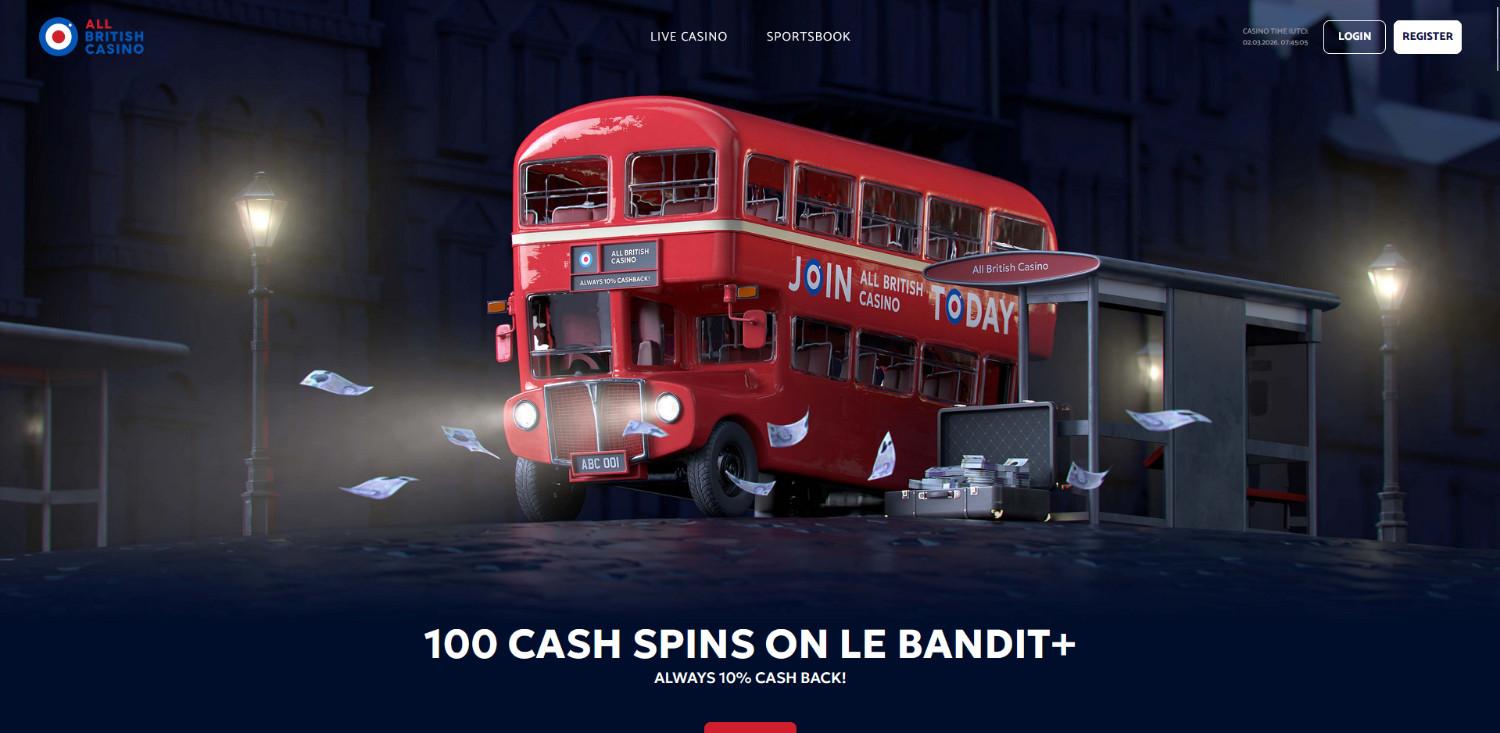
All British Casino launched in 2013 as L&L Europe’s flagship brand and remains the longest-serving member of the network at 13 years old. While William Hill and a handful of other UK heritage operators trace their roots back further, All British Casino’s 13-year run with a clean UKGC record puts it among the most stable mid-tier brands on the market. The Union Jack-heavy design and the “Play British” tagline sit comfortably alongside Pub Casino’s pub theme — both lean into national identity, but All British Casino does so more aggressively. It runs under the same UKGC licence 38758 and Malta Gaming Authority oversight as Pub Casino, with a dual-licensing structure that gives UK players the same regulatory protection found across the L&L portfolio.
The library carries roughly 175 classic slots and a total game count north of 2,000 titles, sourced from the same provider stack that powers Pub Casino. That includes Pragmatic Play, NetEnt, Play’n GO, Blueprint Gaming, Red Tiger, Hacksaw Gaming, Big Time Gaming, Nolimit City, Inspired Gaming and a substantial Evolution live casino lobby. Slot overlap with Pub Casino is heavy — perhaps 80 percent of titles appear on both — but All British Casino also carries an additional 50 or so classic slots that Pub Casino does not stock, plus a handful of provider-exclusive launches that hit the flagship first. Selective curation at this scale puts the catalogue closer in feel to mid-network operators like SlotMonster than to the sprawling 6,000-plus libraries elsewhere in the L&L family.
The current welcome offer awards 100 cash spins worth £0.10 each on Octobeer Fortunes (or a rotating featured slot) when you deposit and wager £10 on slots, with winnings credited as straight cash and no wagering attached. The standing draw is the network’s strongest cashback programme — 10 percent on net deposit losses, calculated continuously and claimable any time your balance dips below £10, with no rollover required and no maximum cash-out cap. Within the broader UK landscape, that ongoing cashback puts All British Casino in similar territory to no-wagering specialists like MrQ, where the player-friendly mechanic is built into the brand identity rather than running as a one-off promotion. Skrill and Neteller deposits are excluded from the welcome offer, which is consistent across all L&L Europe brands.
Banking covers Visa, Mastercard, PayPal, Apple Pay, Trustly and the standard e-wallets. PayPal withdrawals typically clear in under three hours and bank transfers within 24 to 48 hours once verification is complete. There are no withdrawal fees on amounts above £10, though smaller cash-outs incur a £3 administrative charge — identical to Pub Casino’s structure.
Where All British Casino edges Pub Casino is the lifetime cashback programme and the deeper game library. Where it loses ground is visual polish — Pub Casino’s 2023 build feels noticeably crisper next to All British’s older interface. Cross-brand bonus eligibility within the L&L network does apply, so players who claimed the Pub Casino welcome offer may not always qualify for All British Casino’s spins. Read the small print before depositing.
| Metric | The All British Casino Experience |
|---|---|
| Site Identity | Union Jack-heavy patriotic design, traditional casino aesthetic |
| Standout Mechanic | Standing 10 percent cashback on net deposit losses, no rollover |
| Game Edge | 175 classic slots, 2,000+ total titles, full Evolution live lobby |
| Cashback | 10 percent continuous cashback, claimable when balance drops below £10 |
| The Trade-Off | Visual presentation dates back to the original 2013 build |
| Best For | UK players who want the longest-running L&L brand with predictable cashback |
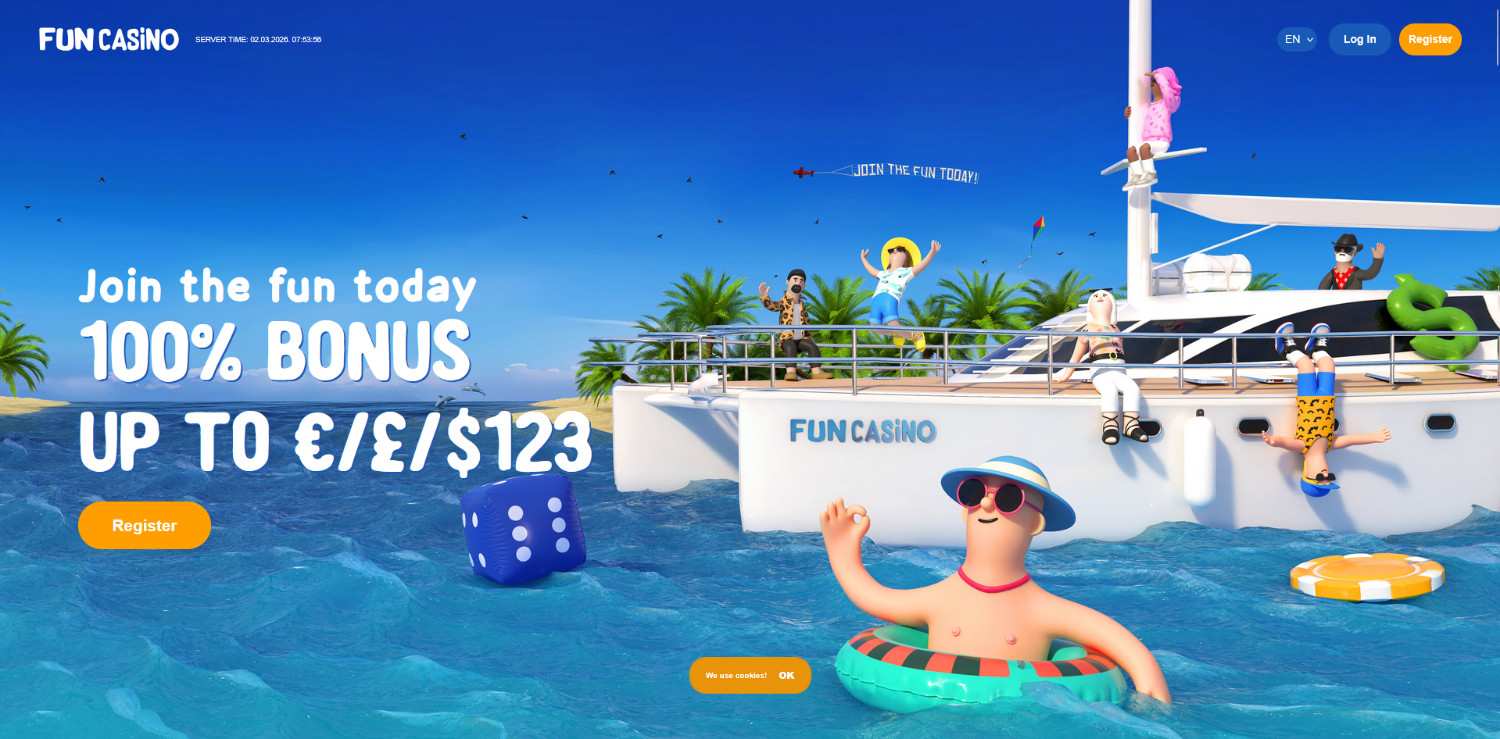
Fun Casino was added to the L&L Europe portfolio in 2017 and trades the patriotic British framing for a brighter, more colourful presentation aimed at a wider European audience. It is available in English, Finnish, Norwegian and Swedish, reflecting its reach beyond the UK market — a multi-market posture reminiscent of operators like Winomania, which similarly target broader European audiences alongside their UK-licensed product. UK-licensed play sits squarely under the same UKGC account 38758 that covers Pub Casino. Where Pub Casino keeps things deliberately understated, Fun Casino runs a more aggressive promotional calendar with weekly tournaments, seasonal campaigns and recurring slot leaderboards.
The library spans roughly 500 slots and an additional 100 or so live tables, with around 16 software providers feeding the lobby. Pragmatic Play, NetEnt, Play’n GO, Evolution, Red Tiger and Hacksaw Gaming are the heavy hitters. Total title count sits below All British Casino and Yeti Casino but above Pub Casino’s 700 mark on slots alone, depending on which provider catalogue is currently live. Live casino access is identical to the rest of the network — Evolution-powered tables with the same dealers, same limits, same game shows.
The current Fun Casino welcome offer matches the rest of the L&L portfolio’s post-cap structure: 50 cash spins worth £0.20 each on a featured slot, triggered by a £10 deposit and £10 in qualifying slot wagers. Spins are valid for 48 hours, winnings are paid as cash with no playthrough requirement, and Skrill deposits are excluded from eligibility. Beyond the welcome, Fun Casino runs a Hyper Friday-style weekly bonus and slot tournament leaderboards more frequently than Pub Casino, which makes it the better fit for players who like recurring activations rather than a single front-loaded offer. Few UK operators run as many concurrent tournaments — Nine Casino and a small handful of competitors push similar volumes. Fun Casino’s calendar density stands out within the L&L Europe family overall, with reload offers, leaderboard prizes and seasonal slot tournaments running in parallel for most of any given month. The sustained cadence sits closer to bingo-led promotional networks like Butlers Bingo than to its quieter L&L siblings.
Withdrawals process within 24 hours via PayPal and within 48 hours via debit card. Banking includes Visa, Mastercard, PayPal, Apple Pay, Trustly, Skrill and Neteller. Customer support runs 24/7 through live chat and email, with phone support available during UK hours — the same support team that handles Pub Casino tickets, which means consistent service quality across the brands.
The trade-off compared to Pub Casino is theme — Fun Casino is generic in its branding where Pub Casino has a distinctive identity. The benefit is the steadier promotional cadence; players who prefer being topped up with weekly reload spins and tournament tickets will get more activations here than at Pub Casino, where the schedule is comparatively quiet.
| Metric | The Fun Casino Experience |
|---|---|
| Site Identity | Bright, colourful, broadly European casino aesthetic |
| Standout Mechanic | Weekly tournaments and recurring reload spin campaigns |
| Game Edge | 500+ slots from 16 providers, full Evolution live lobby |
| Cashback | 10 percent on deposits where no bonus was active |
| The Trade-Off | Brand identity is generic next to themed siblings |
| Best For | Players who prefer ongoing promotions over one-off welcome packages |
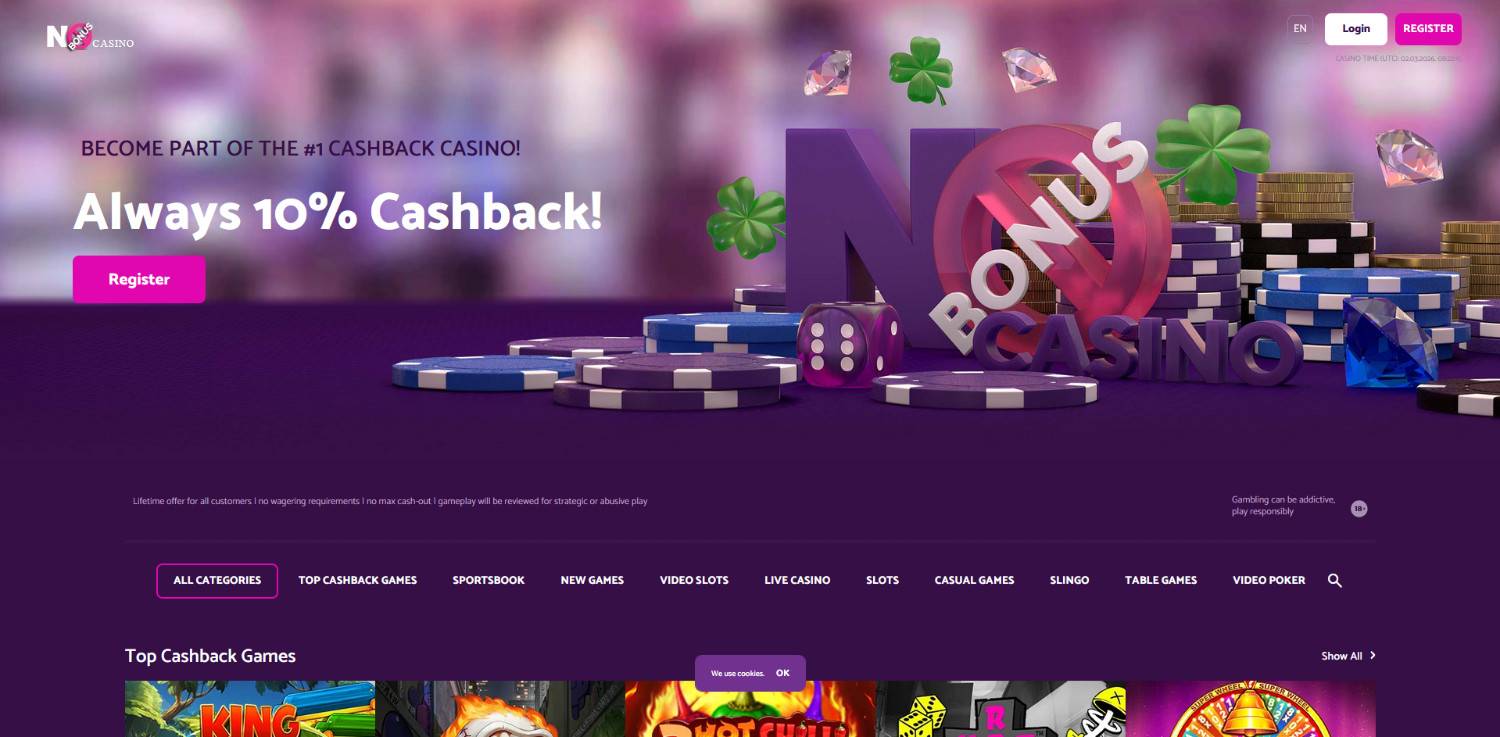
No Bonus Casino is the structural odd-one-out across the L&L Europe network. Launched in 2013 alongside All British Casino, it built its entire proposition around the absence of conventional bonuses. There is no welcome match, no free spins package and no wagering requirements anywhere on the site. The model is a flat 10 percent cashback on every deposit, paid back regardless of whether you win or lose, with no rollover and no maximum cash-out. For players who consistently find standard bonus terms frustrating or who prefer to play their own cash without restrictions on bet size or game choice, this is the most straightforward casino in the entire portfolio.
The library carries roughly 600 slots from 15 software providers, sitting at the lower end of the L&L network for game count but covering all the headline studios — Pragmatic Play, NetEnt, Play’n GO, Hacksaw Gaming, Big Time Gaming, Red Tiger, Evolution, Blueprint and Inspired. Pub Casino carries more titles, and Yeti and Hyper Casino carry significantly more, but the catalogue here is curated rather than exhaustive. The live casino is again Evolution-powered, with the same range of roulette, blackjack, baccarat and game show variants found across the group.
Banking covers the same UK-friendly methods as Pub Casino — Visa, Mastercard, PayPal, Apple Pay and Trustly are the primary deposit options. Withdrawal processing matches the rest of the network at under 24 hours for e-wallets, with the same £3 fee on cash-outs below £10. The cashback is paid out to claim when your balance drops below £10, which is the same threshold mechanic All British Casino uses.
The honest trade-off is that No Bonus Casino simply will not appeal to players who enjoy bonus hunting. There is no deposit match to amplify your bankroll, no free spins to extend playtime and no tournament leaderboard to chase. What it offers in exchange is freedom — bet what you want, play what you want, withdraw when you want, and collect 10 percent back on every deposit indefinitely, with a curated minimalism that sits closer in spirit to no-frills UK operators like Casushi than to bonus-heavy competitors. Compared to Pub Casino’s 50 cash spins welcome offer, No Bonus Casino is the more sustainable proposition for regular players who deposit weekly rather than chase a single front-loaded bonus.
| Metric | The No Bonus Casino Experience |
|---|---|
| Site Identity | Minimalist, stripped-back design with zero promotional clutter |
| Standout Mechanic | 10 percent cashback on every deposit, no wagering, no max cash-out |
| Game Edge | 600 curated slots from 15 providers, full Evolution live lobby |
| Cashback | Lifetime 10 percent return on deposits, claimable below £10 balance |
| The Trade-Off | No welcome match, no free spins, no bonus-hunting upside |
| Best For | Regular depositors who want predictable returns without bonus terms |
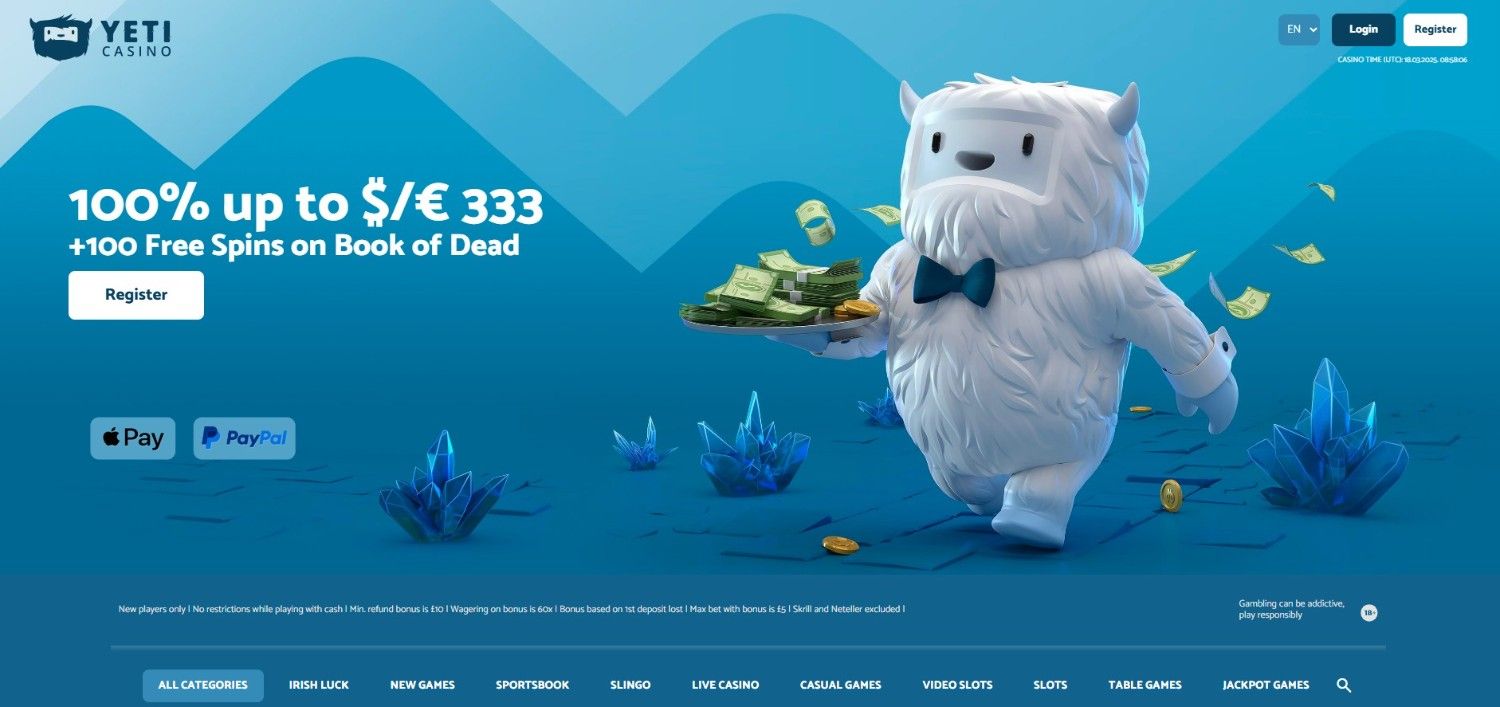
Yeti Casino launched in 2017 with a mountain-exploration theme — cool blue and white backgrounds, a friendly snow monster mascot, and an arctic visual identity that contrasts sharply with Pub Casino’s warm pub interior. The arctic identity is one of the more distinctive themes in the L&L family, sitting closer to the immersive aesthetic of operators like Aztec Paradise than to All British Casino’s understated heritage branding. Sources consistently report Yeti Casino as carrying one of the largest game counts in the L&L Europe network, with totals north of 3,000 titles when slots, live tables, Slingo, jackpots and arcade games are combined. That puts it well ahead of Pub Casino’s roughly 700 slot library and on par with the broader L&L network leaders.
The provider stack mirrors the rest of the network — Pragmatic Play, NetEnt, Play’n GO, Evolution, Red Tiger, Hacksaw Gaming, Blueprint, Big Time Gaming, Nolimit City — but the volume of titles per provider runs higher. Pragmatic Play in particular is heavily represented, with Yeti Casino reporting an average Pragmatic RTP of 96.50 percent in the slots that have been measured by independent reviewers, which is a fraction higher than the L&L group average of 94.5 percent. For players who want depth of choice across new releases and back-catalogue titles, Yeti Casino has the broadest selection in the family.
The current welcome offer splits into two parts: 23 free spins (subject to 10x wagering on winnings) credited on registration, followed by 77 cash spins after a £10 first deposit and £10 wager on qualifying slots. The cash spins component carries no wagering, no max cash-out and pays directly to your real-money balance. Skrill deposits are excluded from eligibility, which is consistent with every other L&L Europe brand. The two-stage structure delivers more total spins than Pub Casino’s 50-spin offer, though some of those spins do come with playthrough.
Banking matches the network standard — Visa, Mastercard, PayPal, Apple Pay, Trustly, Skrill and Neteller. Withdrawals process within 24 hours via PayPal and within 24 to 72 hours via card, depending on issuing bank. Customer support is the shared 24/7 live chat and phone team that services every L&L brand, so response times and answer quality are identical to what you would get at Pub Casino.
The trade-off compared to Pub Casino is theme — if British pub aesthetics are the main draw for you at Pub Casino, Yeti Casino will not deliver the same atmosphere. What it does deliver is the largest single-site game library across the L&L family and a slightly more generous welcome split.
| Metric | The Yeti Casino Experience |
|---|---|
| Site Identity | Cool blue and white arctic theme with friendly yeti mascot |
| Standout Mechanic | Two-stage welcome offer combining no-deposit and cash spin tiers |
| Game Edge | 3,000+ total titles, highest provider depth in the L&L network |
| Cashback | 10 percent on deposits where no bonus was active |
| The Trade-Off | First-stage 23 spins carry 10x wagering on winnings |
| Best For | Players who want maximum game variety and a more generous spin split |
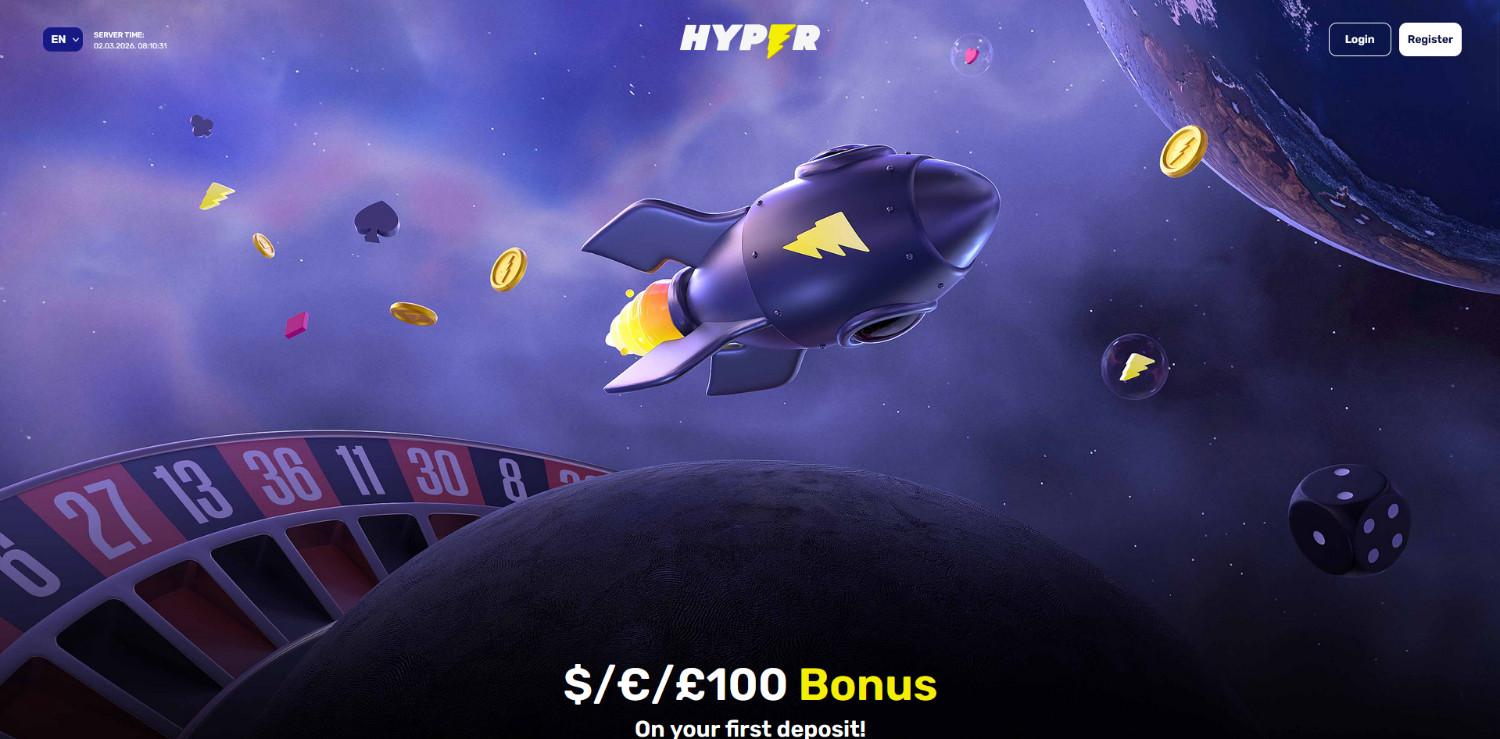
Hyper Casino is the network’s most aggressively mobile-optimised brand, built around a fast, neon-heavy interface that prioritises tap-friendly navigation over the more traditional desktop-first layouts found at All British Casino and Pub Casino. The visual identity leans into electric purples, glowing accents and a high-energy presentation that contrasts deliberately with the warmer pub theme. Game count sits in the 6,000+ range across slots, live tables, Slingo, jackpots and instant win games, making it one of the larger libraries in the L&L portfolio alongside Yeti Casino. By UK mobile-first standards, that puts Hyper Casino in a different bracket entirely from leaner mobile-native operators like PocketWin, which trade catalogue depth for quicker session play and smaller download footprints.
The provider stack is the same network-wide template — Pragmatic Play, NetEnt, Play’n GO, Evolution, Red Tiger, Hacksaw Gaming, Big Time Gaming, Blueprint, Nolimit City, Stakelogic, Elk Studios and Relax Gaming. Hyper Casino’s edge is volume rather than exclusivity, with deeper back catalogues from each studio than Pub Casino’s more curated library. The live casino lobby is again Evolution-powered, with the standard suite of roulette, blackjack, baccarat, Lightning variants and game shows like Crazy Time and Monopoly Live available with identical limits to the rest of the group.
The welcome offer follows the post-cap network template — 50 cash spins worth £0.20 each on a featured slot after a £10 deposit and £10 qualifying wager, with winnings paid as cash and no wagering attached. Spins expire within 48 hours, Skrill deposits are excluded, and the standing 10 percent cashback on bonus-free deposits applies on the same terms as the rest of the L&L brands. Hyper Casino does not currently support Pay’n’Play in the way Race Casino does, but mobile deposits via Apple Pay and Trustly are particularly slick on iOS.
Banking covers the standard suite — Visa, Mastercard, PayPal, Apple Pay, Trustly, Skrill and Neteller — with PayPal withdrawals typically clearing within 24 hours. Customer support operates 24/7 across live chat, phone and email, sharing the same agent pool as every other L&L Europe brand. There is no dedicated Android or iOS app; the mobile experience runs entirely through the responsive browser site. Players who prioritise a polished native app may find established UK names like Unibet better suited, but for browser-based mobile play Hyper Casino is among the strongest performers in its tier.
The trade-off compared to Pub Casino is theme cohesion — Hyper Casino’s neon-heavy presentation will feel jarring to players who specifically prefer Pub Casino’s pub aesthetic. The advantage is library depth and a markedly faster mobile interface, particularly on lower-end Android devices where Pub Casino can occasionally feel sluggish.
| Metric | The Hyper Casino Experience |
|---|---|
| Site Identity | Neon-heavy, high-energy visual design optimised for mobile |
| Standout Mechanic | Tap-first interface and one of the fastest mobile load times in the network |
| Game Edge | 6,000+ titles with deep back catalogues across all major providers |
| Cashback | 10 percent on deposits where no bonus was active |
| The Trade-Off | No native app, no Pay’n’Play, theme will divide opinion |
| Best For | Mobile-first players who want maximum library depth on a phone |
Every site profiled here was tested with fresh accounts and real money. Registration completed under standard UK ID details, with deposits ranging from £20 to £50 made via PayPal and Visa debit card. Welcome offers were activated where eligible, and a standardised slot rotation — Big Bass Bonanza, Gates of Olympus, Sweet Bonanza, Book of Dead and a featured live roulette table — was used to assess game performance and load times. Withdrawals were requested at the network minimum for each method, with timestamps logged from request submission to funds arriving in the destination account. Live chat support was tested with verification queries during peak UK hours and overnight, and phone support was tested where available.
Pub Casino sits in the middle of the L&L Europe pack on most measurable dimensions. Its 700-strong slot library is smaller than All British Casino’s 2,000-plus, Yeti Casino’s 3,000-plus and Hyper Casino’s 6,000-plus, but it covers all the headline providers and the same Evolution live casino lobby. Outside the L&L family, the closest analogues for that mid-pack positioning are operators like bwin, which sit comfortably between heavyweight UK brands and boutique specialists. Where Pub Casino genuinely leads is visual presentation — the 2023 build is the crispest interface in the network, with cleaner typography and a more confident theme execution than any of the older brands. The welcome offer is identical in structure to Fun Casino, Hyper Casino and most current network promotions: 50 cash spins worth £0.20 each, no wagering, 48-hour expiry. All British Casino’s 100 spin offer is technically more generous, and No Bonus Casino’s flat cashback model serves a different player profile entirely. Where Pub Casino loses ground compared to its siblings is the comparatively quiet ongoing promotional schedule — Fun Casino and Hyper Casino both run more frequent reload bonuses and tournament leaderboards. Cross-brand bonus eligibility applies across the network, meaning a welcome offer claimed at one L&L Europe brand may disqualify you from the same offer at another.
L&L Europe’s most recent UK launch was QuickBet Casino, added to the portfolio in 2025 as the network’s tenth brand. No further new casino brands have launched in the L&L Europe family during 2026 to date, and the operator’s stated approach is quality over quantity rather than rapid network expansion. Yako Casino, previously a sibling brand, has closed and is no longer accepting UK players. Network churn at L&L Europe is consistently lower than at white-label-heavy operators like Casino Ways, where brand cycling can be more frequent. The lack of churn is a positive signal for stability — operators that maintain a steady portfolio over years tend to be more reliable than those that rapidly cycle new brands in and out, which is often a hallmark of white-label operators rather than directly-owned networks like L&L Europe. The company also operates sportsbook variants attached to several of its casino brands, including Pub Sports, Fun Sports, Hyper Sports, All British Sports and QuickBet Sports.
| Payment Method | Min Deposit | Max Deposit | Withdrawal Time | Fees |
|---|---|---|---|---|
| Visa Debit | £10 | £5,000 | 1 to 3 working days | None above £10 cash-out |
| Mastercard Debit | £10 | £5,000 | 1 to 3 working days | None above £10 cash-out |
| PayPal | £10 | £5,500 | Under 3 hours | None above £10 cash-out |
| Apple Pay | £10 | £1,000 per transaction | 1 to 3 working days (to source card) | None above £10 cash-out |
| Trustly | £10 | £10,000 | Under 24 hours | None above £10 cash-out |
| Skrill | £10 | £5,500 | Under 24 hours | None (welcome bonus excluded) |
| Neteller | £10 | £5,500 | Under 24 hours | None (welcome bonus excluded) |
| Bank Transfer | £20 | £10,000 | 2 to 5 working days | None above £10 cash-out |
For UK players, PayPal is consistently the fastest option across the entire L&L Europe network, with documented withdrawal times under three hours once your account has cleared verification. Trustly is a strong second choice if you prefer not to use PayPal and want sub-24-hour processing. Apple Pay is convenient for mobile deposits but inherits the source card’s withdrawal timing rather than its own. Skrill and Neteller deposits are excluded from welcome bonus eligibility across every L&L Europe brand without exception, so if claiming the welcome offer matters to you, use PayPal, Trustly or a debit card on first deposit. All withdrawals below £10 carry a flat £3 administrative fee, which is consistent across the network and worth planning around if you typically cash out small amounts. The £10 minimum across L&L Europe is consistent with most UKGC-licensed operators, though specialists like Cashmo push the deposit threshold lower for casual players who want to top up smaller amounts.
| Site | Top 5 Providers | Approx. Game Count | Live Dealer |
|---|---|---|---|
| Pub Casino | Pragmatic Play, NetEnt, Play’n GO, Evolution, Hacksaw Gaming | 700+ | Yes |
| All British Casino | Pragmatic Play, NetEnt, Play’n GO, Evolution, Blueprint Gaming | 2,000+ | Yes |
| Fun Casino | Pragmatic Play, NetEnt, Play’n GO, Evolution, Red Tiger | 500+ | Yes |
| No Bonus Casino | Pragmatic Play, NetEnt, Play’n GO, Evolution, Big Time Gaming | 600+ | Yes |
| Yeti Casino | Pragmatic Play, NetEnt, Play’n GO, Evolution, Hacksaw Gaming | 3,000+ | Yes |
| Hyper Casino | Pragmatic Play, NetEnt, Play’n GO, Evolution, Stakelogic | 6,000+ | Yes |
Provider overlap across the network is heavy because L&L Europe operates its own proprietary platform rather than licensing a third-party aggregator. That means every brand has access to the same studio integrations, with the differences coming from how many titles each casino chooses to surface in its lobby rather than which studios are available. That single-platform approach makes the L&L network operationally simpler than multi-vertical operators like Mirror Bingo, where bingo, slots and casino integrate from different platforms and provider exclusives can lock content to specific brands. The largest distinguishing factor across L&L brands is volume — Hyper Casino and Yeti Casino lean heavy on back catalogues, while Pub Casino, Fun Casino and No Bonus Casino curate more aggressively. Provider exclusives are rare across the L&L family; Hacksaw Gaming, Nolimit City and Big Time Gaming launches typically appear network-wide within days of release, which contrasts with bingo-led portfolios such as Gala Bingo where brand-specific content is more common.
The live casino experience is identical across every L&L Europe brand because it is powered by the same Evolution Gaming integration. That covers the full suite of Evolution roulette tables (European, French, Lightning, Speed, Auto, Immersive), blackjack tables (Classic, Speed, Infinite, Free Bet, Lightning), baccarat variants and the high-volume game shows that drive most live casino engagement — Crazy Time, Monopoly Live, Lightning Roulette, Dream Catcher and Mega Wheel. Table limits are consistent across the brands, with most blackjack tables ranging from £1 to £5,000 and roulette tables ranging from £0.10 to £10,000 depending on variant. A handful of sites including Pub Casino additionally carry Playtech live tables for game variety, and Pragmatic Play Live shows like Sweet Bonanza Candyland appear network-wide. Mobile streaming quality is solid on a stable connection, with HD video on iOS and most modern Android devices. Latency is identical to the desktop experience.
None of the L&L Europe brands offer dedicated native iOS or Android apps. Every site runs through a responsive browser interface, which keeps the experience consistent across devices but means players who prefer a downloadable app will be disappointed. In practice, the responsive sites perform well — page load times on iPhone are consistently under three seconds on 4G, and game launch times on slots average four to six seconds. Hyper Casino is the strongest mobile performer in the network, with a layout specifically designed for portrait orientation and tap-friendly navigation. Pub Casino’s mobile site is well-built but feels slightly more constrained on smaller screens because the pub theme adds visual density. PayPal and Apple Pay deposits on mobile are seamless across every brand, which is the bigger practical advantage over an app for most players.
Loyalty mechanics across the L&L Europe network are notably consistent, which is both a strength and a limitation depending on your perspective. Every brand offers the same standing 10 percent cashback on deposits where no bonus was active, paid out continuously and claimable when your balance drops below £10. That flat-rate approach contrasts with tiered operators like Jammy Monkey and similar UK casino networks where cashback rates and rewards scale with deposit volume. There is no points-based VIP ladder of the kind found at SkillOnNet or Jumpman Gaming brands, no tiered status that unlocks higher cashback rates or faster withdrawals, and no personal account manager allocations for high-stake players. What you get instead is a flat playing field — every player on the network receives the same cashback rate, the same withdrawal speeds and the same support priority regardless of deposit history. All British Casino arguably has the most refined loyalty proposition because the cashback feels integrated into the brand identity rather than tacked on, but the actual mechanic is identical to what Pub Casino offers. For players who specifically want VIP perks, gift bundles, birthday bonuses or stake-based rewards, the L&L family is not the right network. The cashback-as-loyalty approach is more sustainable and more transparent than most VIP schemes, but it is undeniably less exciting.
Honesty matters more than marketing here, and there are genuine gaps across the L&L Europe network worth flagging before you sign up. Cryptocurrency support is absent across every brand — neither Bitcoin nor any altcoin is accepted as a deposit method, which is the case for most strictly UKGC-licensed operators but worth noting if crypto convenience is important to you. Bingo verticals are missing entirely; the network is a casino-and-sportsbook operation with no bingo product, so players who want to combine slots play with bingo rooms in a single account will need to look elsewhere — dedicated bingo networks like Fabulous Bingo cover that space far more comprehensively. Sports betting is available at several brands through dedicated Sports variants (Pub Sports, Fun Sports, Hyper Sports, All British Sports, QuickBet Sports), but the integration is not as seamless as you would find at native sportsbook-first operators. Tiered VIP programmes with status ladders, dedicated account managers and birthday gift bundles are not part of the L&L proposition. Independent eCOGRA seals are not displayed across every brand even though some sources reference eCOGRA testing — players who specifically want to see prominent independent audit certificates may find the network’s transparency on testing slightly less polished than at brands like 32Red or PlayOJO. Native mobile apps are absent across the entire portfolio, with every site running through responsive browser play instead.
Every site profiled in this guide operates under L&L Europe Ltd’s UK Gambling Commission account 38758, which has held a clean regulatory record without fines or sanctions since the operator was first granted its UK licence in 2014. The dual MGA and UKGC structure provides players with two layers of regulatory oversight — UKGC for UK-resident play and MGA for the broader European footprint — and the Swedish Spelinspektionen licence (18Li7872) covers the operator’s Nordic operations. SSL/TLS encryption is implemented across every site, KYC verification is mandatory before withdrawals are released, segregated player funds are maintained per UKGC requirements, and Random Number Generator testing is conducted to UKGC standards. The 2026 UK regulatory environment adds further layers of player protection: the £5 maximum stake on online slots (£2 for 18-24 year olds), the 10x wagering cap on bonus offers introduced in December 2025, the affordability check requirements that apply to higher-spend players, and the 40 percent Remote Gaming Duty increase that took effect in April 2026 — none of these are optional and all are reflected in the current bonus structures across the L&L network.
| Site | Licence Body | UKGC Licence No. | Self-Exclusion Registered | RNG Testing |
|---|---|---|---|---|
| Pub Casino | UKGC + MGA | 38758 | Yes | Yes |
| All British Casino | UKGC + MGA | 38758 | Yes | Yes |
| Fun Casino | UKGC + MGA | 38758 | Yes | Yes |
| No Bonus Casino | UKGC + MGA | 38758 | Yes | Yes |
| Yeti Casino | UKGC + MGA | 38758 | Yes | Yes |
| Hyper Casino | UKGC + MGA | 38758 | Yes | Yes |
For dispute resolution, every L&L Europe brand is enrolled with an Alternative Dispute Resolution provider as required by the UKGC, with eCOGRA the most commonly cited ADR for the network. Players who cannot resolve a complaint directly with the casino can escalate first to the ADR, then to the UKGC’s complaint service, and finally to Resolver for independent mediation. Response times from L&L Europe’s complaints team are consistently reported as faster than industry average, with most disputes resolved within five to ten business days where the matter is straightforward.
Trustpilot review data across Pub Casino and its siblings is broadly positive, but a handful of recurring complaint patterns are worth flagging. The most consistent friction point is KYC verification timing — multiple players report being asked for documents at the point of first withdrawal rather than at registration, which can feel intrusive when you are trying to cash out quickly. The operator’s stated reason is that UK players pass an electronic credential check at registration, with documents only requested when triggered by withdrawal patterns or affordability thresholds. This pattern is not unique to L&L Europe — comparable UK operators like Betzone report similar friction at the withdrawal stage when verification is triggered by transaction limits or account flags. Account suspension complaints appear less frequently but do exist, typically tied to bonus abuse investigations or duplicate account flags. A smaller but vocal cluster of complaints centres on the lack of “recently played” or “favourites” features in the games lobby, which forces players to search for titles each session. Bonus eligibility confusion crops up occasionally, particularly around Skrill and Neteller exclusion from welcome offers — this is clearly stated in the terms but easily missed. Finally, a handful of players report wanting more frequent ongoing promotions at Pub Casino specifically, with several Trustpilot reviewers noting they have switched to All British Casino or Fun Casino for the more active promotional calendars.
| Source | What Players Praise | What Players Criticise |
|---|---|---|
| Reddit (/r/UKCasinos and /r/onlinegambling) | Fast PayPal withdrawals, 24/7 phone support availability, English-speaking agents, clean regulatory record | Limited ongoing promotion frequency, 48-hour spin expiry on welcome offers, lobby UX missing favourites |
| Trustpilot (1,047+ reviews on Pub Casino alone) | Same-day or sub-3-hour withdrawals once verified, helpful named support agents, transparent operator responses to negative reviews | KYC document requests only at withdrawal stage, cashback claim threshold mechanics, occasional weekend processing delays |
| AskGamblers | Smooth registration, reliable game selection, secure payment methods, responsive customer service, eCOGRA testing | High historical wagering on legacy bonus structure (now retired), absence of dedicated mobile app |
| Casino Guru | UKGC compliance, transparent T&Cs, low complaint rate relative to network size, segregated player funds | Limited language support beyond English at some brands, no native app, no crypto support |
The aggregate sentiment across all four sources is positive. Pub Casino specifically holds a Trustpilot score of around 4.4 out of 5 across more than a thousand reviews, with operator-side responses to negative reviews that frequently reference specific gameplay history rather than generic apologies — a credibility signal that this is an actively-managed brand rather than a passively-operated white-label. The most consistent praise centres on payout speed and support quality, the most consistent criticism centres on KYC timing and the relative quiet of the ongoing promotional calendar.
The current Pub Casino welcome offer follows the network template introduced after the December 2025 UKGC 10x wagering cap took effect. Deposit £10 (via any method except Skrill and Neteller), wager £10 on qualifying slots, and you receive 50 cash spins valued at £0.20 each on a featured slot — typically Octobeer Fortunes, with a 96.53 percent RTP. The total nominal value of the spins is £10, winnings are paid as cash with no wagering attached, and there is no maximum cash-out cap on what you win from those spins. The catch is the 48-hour expiry window, which means you need to use the spins within two days of activation or forfeit them. To worked example: deposit £10, wager £10 on slots, receive 50 spins worth £10 nominal value, hit average winnings of £6.50 (typical for a 96.53 percent RTP slot at that bet size), and £6.50 lands directly in your withdrawable cash balance with no rollover required. That is genuinely the simplest welcome structure available at any UK casino in 2026, and it is consistent across Pub Casino, Fun Casino, Hyper Casino and most other L&L Europe brands.
No-deposit bonuses are not currently available at Pub Casino itself, but Yeti Casino offers 23 free spins on registration with no deposit required (subject to 10x wagering on winnings), making it the only L&L Europe brand currently running a true no-deposit welcome promotion. All British Casino’s offer is structurally similar to Pub Casino’s but at 100 cash spins worth £0.10 each rather than 50 at £0.20 — same total nominal value, twice the playtime per spin. No Bonus Casino’s standing 10 percent deposit cashback applies from your first deposit forward with no welcome match, which makes it the highest-value option for players who plan to deposit consistently rather than chase a one-off front-loaded bonus. Comparable simplified welcome packages have begun appearing at other UKGC operators in response to the same regulatory shift, with Vegas Moose and similar post-cap launches adopting structurally similar cash-spin models that prioritise straightforward terms over headline match percentages.
Pick the right sibling based on what you actually do at a casino. If you play primarily for entertainment with small stakes and value a clean, distinctive theme, Pub Casino itself is well-positioned and the welcome offer is competitive. If you want the longest track record and the most dependable cashback programme, All British Casino is the safer pick. If you deposit regularly and find bonus terms more annoying than valuable, No Bonus Casino’s flat 10 percent cashback model is structurally better than any front-loaded offer in the network. If you specifically want maximum library depth and back-catalogue access, Yeti Casino or Hyper Casino are the deepest catalogues in the family. If you play primarily on mobile and need fast load times on lower-end devices, Hyper Casino’s interface is purpose-built for that. If you like recurring weekly reload bonuses and tournament leaderboards, Fun Casino runs the most active promotional calendar. Outside the L&L network, players who specifically want UK bingo-led promotional cycles often migrate to dedicated brands like Buzz Bingo, but within the family Fun Casino remains the natural pick. The provider stack and live casino experience are essentially identical across every brand, so do not let game library overlap drive your choice — the differentiators are theme, welcome structure and ongoing promotional cadence. If withdrawal speed is the deciding factor for you, our wider guide to the fastest UK withdrawal casinos covers operators that consistently clear PayPal cash-outs in under three hours.
If you want a single recommendation from inside the network, All British Casino is the strongest all-round Pub Casino sister site for UK players in 2026. It carries the longest operating history (13 years and counting), the deepest cashback programme (continuous 10 percent on net deposit losses), a larger game library than Pub Casino itself, and the strongest brand identity within the family for UK-focused play. The welcome offer at 100 cash spins is structurally more generous than Pub Casino’s 50-spin equivalent, and the standing cashback compounds across every deposit you make rather than activating once and expiring. For players who specifically want zero bonus terms, No Bonus Casino is the better pick. For mobile-first players, Hyper Casino takes the spot. If you want to explore beyond the L&L family altogether, established UK brands like Party Casino offer a different operational model with their own merits — broader vertical integration, larger marketing budgets and longer brand recognition. But for a balanced UK-focused experience that improves on Pub Casino without losing the L&L network’s regulatory and operational strengths, All British Casino is the natural step up. Players who want to compare welcome offers, payment methods and promotional value across the full UK landscape rather than just the L&L family can browse our complete casino directory for side-by-side reviews. Whichever site you choose, complete your KYC verification immediately after registration rather than waiting for a withdrawal trigger — uploading ID, proof of address and payment method documents at signup eliminates the most common friction point reported across the entire network. If KYC friction is a particular sticking point, the broader category of streamlined verification UK casinos covers operators that have specifically optimised this part of the player journey.