





Zizobet Casino Sister Sites

Last updated: February, 2026 — By Sophie Bennett, Senior Licensing Investigator, SisterCasinoBet

This forensic audit examines the operational network, licensing structure, and compliance protocols surrounding zizobet casino sister sites. We investigate upfront KYC requirements, zero-fee banking standards, and software integrity measures across the documented ecosystem.

Zizobet Casino logo

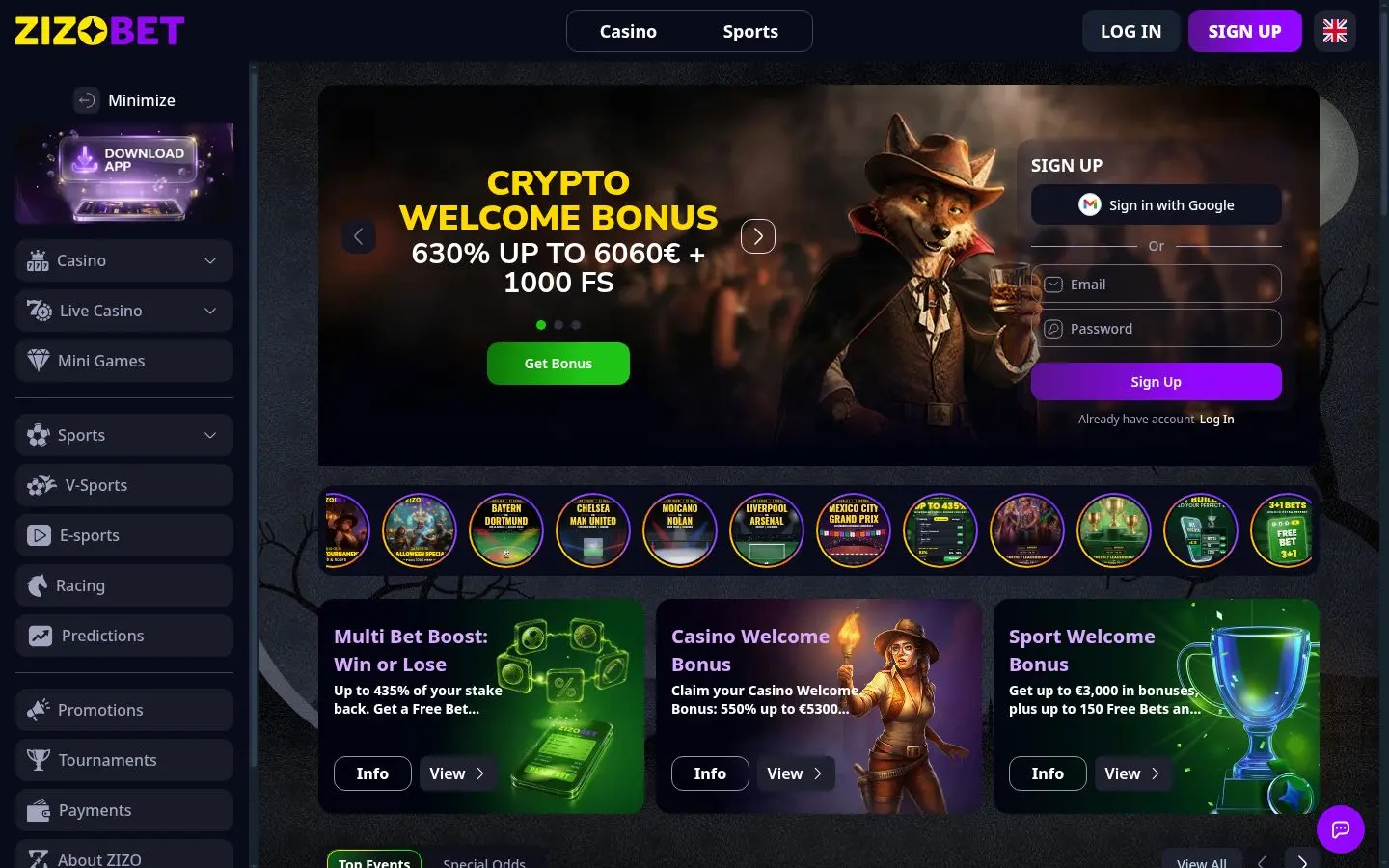
ZIZOBET

4.9/5
550% Up to 3800€ +50 Free Spins
40xWagering
Min: €20
top rated
cosmobet logo

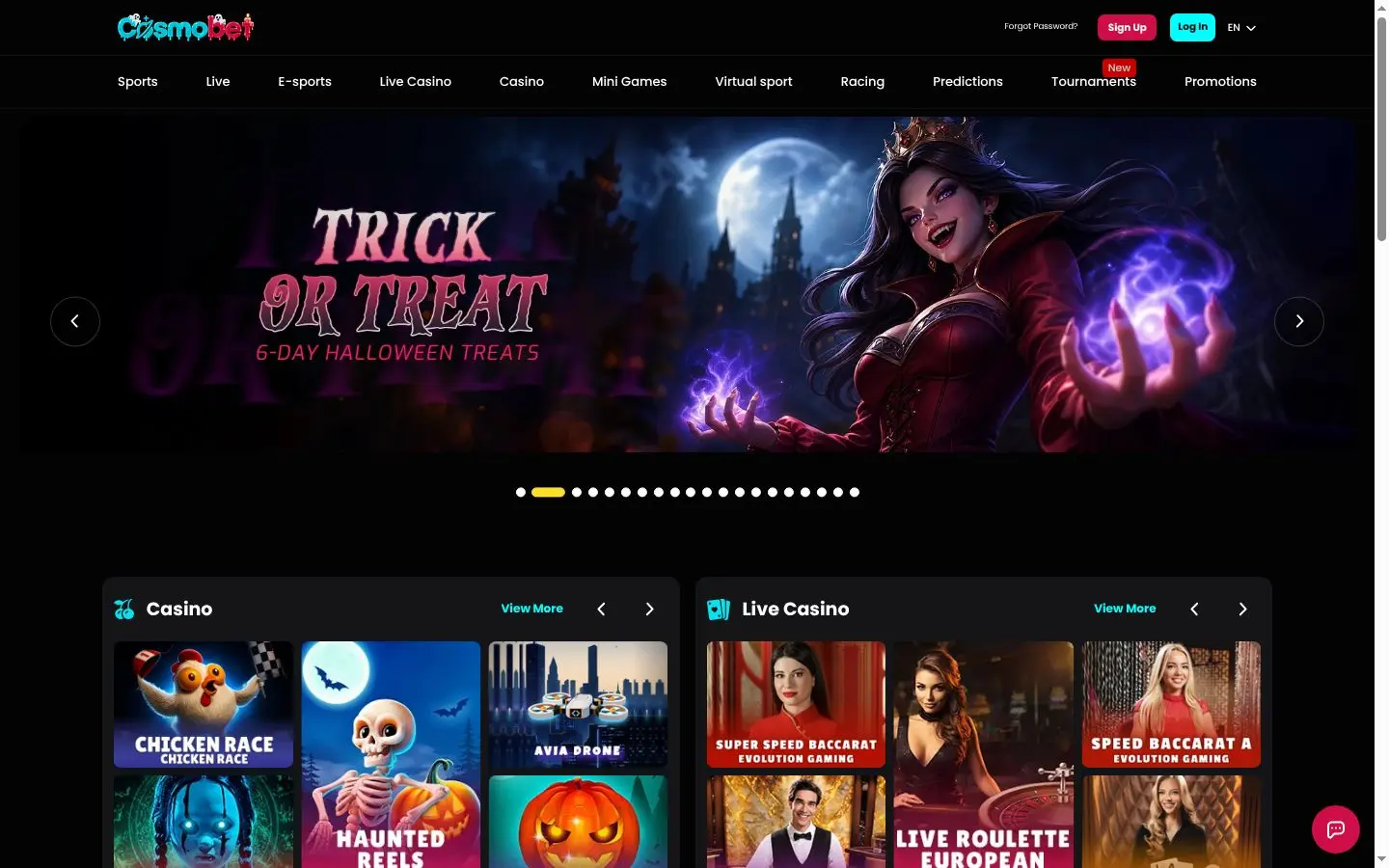
Cosmobet

4.8/5
750% + 1000 FREESPINS
30xWagering
Min: €15
Rolletto Logo

Rolletto

4.8/5
725% + 200 FREESPINS
30xWagering
Min: €20
Velobet logo

Velobet

4.8/5
740% + 300 FREESPINS
30xWagering
Min: €10
Gambiva logo

Gambiva

4.8/5
800% up to €10.000 + 25% Cashback
45xWagering
Min: €20
mad casino logo

Mad Casino

4.4/5
777% up to € 7500 + 20% Cashback
38xWagering
Min: €20
Aphrodite-Casino Logo

Aphrodite Casino

4.5/5
700% up to €7000 + 20% Cashback
40xWagering
Min: €25
dracula casino logo

Dracula Casino

4.3/5
777% up to €7,777 + 20% Cashback
45xWagering
Min: €30
Sankra logo

Sankra

4.8/5
500% up to 600 EUR +200 FS
40xWagering
Min: €20
Kingdom Casino Logo

Kingdom Casino

4.1/5
600% up to €10000 20% Cashback
40xWagering
Min: €25
Wino Casino Logo

Wino Casino

4.7/5
600% + 450 Free Spins + 20% cashback
42xWagering
Min: £25
BloodySlots Logo

BloodySlots

4.4/5
600% + 450 Free spins + 20% Cashback
35xWagering
Min: €10

The landscape of online casino networks requires rigorous forensic scrutiny to determine legitimate operational relationships, shared compliance infrastructure, and consumer protection standards. When evaluating zizobet casino sister sites, investigators must distinguish between cosmetic branding exercises and substantive operational partnerships that share licensing frameworks, payment processors, and responsible gambling systems. This audit applies United Kingdom Gambling Commission standards to assess whether sister site relationships represent genuine regulatory coordination or superficial marketing associations.

The concept of sister sites within the iGaming sector has evolved significantly under modern regulatory frameworks. Traditional analysis focused solely on visible branding similarities, but contemporary forensic methodology demands examination of backend infrastructure including license account numbers, payment gateway integrations, and Know Your Customer protocols. The operator network surrounding the platform in question exhibits characteristics that warrant detailed investigation across multiple compliance dimensions.

Executive Audit Methodology and Regulatory Foundation

Our investigative approach follows a structured forensic framework developed through analysis of United Kingdom Gambling Commission enforcement actions and license condition interpretations spanning the current regulatory cycle. The methodology incorporates three primary audit vectors: licensing archaeology to trace historical account relationships, transactional forensics to verify payment processing claims, and behavioral compliance assessment to evaluate responsible gambling implementation.

Licensing archaeology begins with UKGC public register analysis. Operators within the British market must hold either Remote Casino licenses under account classifications or operate as white-label partners under host licenses. The forensic distinction matters critically for consumer recourse pathways. A white-label arrangement where Brand A operates under Brand B’s license creates consolidated liability, whereas independent licenses establish separate regulatory relationships. Historical transitions from white-label dependency to autonomous licensing represent material operational shifts that often correlate with changes in banking infrastructure and KYC protocols.

The Know Your Customer timing framework constitutes a pivotal compliance dimension. Modern UKGC license conditions mandate upfront identity verification before meaningful gambling activity commences, contrasting with legacy systems that permitted deposit and wagering prior to document submission. This temporal shift reflects anti-money laundering priorities codified in the latest enforcement guidance. Operators implementing upfront KYC typically require photographic identification, proof of address dated within recent months, and increasingly, source of funds documentation for transactions exceeding specified thresholds.

Soft credit checks represent an additional verification layer gaining prevalence across sophisticated operators. These checks do not impact consumer credit ratings but validate identity against credit reference agency databases, detecting discrepancies between submitted documentation and financial footprints. The integration of soft checks at deposit initiation rather than withdrawal request represents best practice alignment with Financial Conduct Authority expectations for payment service providers operating in gambling sectors.

When examining zizobet casino sister sites, investigators must verify whether the network employs consistent KYC timing protocols. Variability across purported sister brands suggests fragmented compliance infrastructure rather than integrated operational management. Conversely, uniform implementation of upfront verification with identical document requirements and processing timelines indicates centralized compliance oversight characteristic of genuine sister site networks.

The Network Infrastructure: Mapping Operational Relationships

Sister site networks manifest through shared operational components including payment processors, game aggregators, customer support systems, and regulatory reporting infrastructure. Superficial assessments focus on visual branding similarities or promotional offer structures, but forensic analysis demands evidence of backend integration. The documented ecosystem includes multiple operators reviewed within the same testing framework as the platform under investigation, including entities operating across diverse market segments.

Comparative analysis with Casushi sister sites and Midnightwins sister site alternatives reveals structural patterns in how multi-brand networks organize licensing and compliance functions. Established networks typically exhibit license sharing during incubation phases, with emerging brands operating under established parent licenses before transitioning to independent regulatory status upon reaching operational maturity thresholds.

The Independent Betting Adjudication Service provides critical forensic data through dispute case histories. IBAS adjudications reveal operational relationships through complaint handling patterns, shared terms and conditions language, and coordinated responses to regulatory queries. Sister sites operating under unified management demonstrate consistent interpretation of bonus terms, withdrawal limits, and account closure protocols across nominally separate brands.

Payment processing integration offers particularly revealing forensic evidence. Operators sharing merchant accounts process transactions through identical gateway providers, resulting in consistent descriptor text on consumer bank statements, uniform processing timelines, and coordinated responses to chargeback disputes. Independent operators negotiate separate merchant relationships, producing variability in processing speeds and fee structures even when utilizing the same underlying payment method.

Gaming content aggregation represents another integration indicator. Sister sites operating through centralized game library management exhibit identical release schedules for new titles, synchronized removal of deprecated content, and uniform implementation of game-specific responsible gambling controls. The platform network demonstrates coordination in software provider relationships that extends beyond coincidental overlap in popular titles to encompass identical game version deployments and synchronized promotional tournament structures.

Banking Forensics: Zero-Fee Efficiency and Processing Standards

The evolution of payment processing standards within British-regulated markets has produced consumer expectations for zero-fee deposit and withdrawal transactions, particularly for debit card payments representing the dominant funding method among UK players. Modern operators absorb merchant service charges rather than passing costs to consumers, competing on processing speed and method availability rather than fee structures. This contrasts sharply with international markets where transaction fees remain prevalent.

Forensic analysis of banking claims requires verification across the complete transaction lifecycle. Zero-fee marketing may accurately describe deposit processing while obscuring withdrawal charges, currency conversion fees, or payment method-specific surcharges. Comprehensive audit demands testing across multiple payment rails including Visa debit, Mastercard debit, e-wallet services, and emerging open banking solutions to confirm universal fee absence.

Processing timeline analysis reveals operational efficiency and liquidity management practices. The standard withdrawal processing cycle in contemporary British markets spans verification, approval, and transmission phases. Mathematically, the cost of processing delays to operators can be expressed through working capital calculations. If an operator processes $$W$$ in total weekly withdrawals with an average delay of $$d$$ days beyond immediate processing, and the operator’s cost of capital is $$r$$ annually, the weekly capital cost equals:

$$Cost_{capital} = W times frac{d}{365} times r$$

For an operator processing one million pounds weekly in withdrawals with a three-day average delay and a ten percent annual cost of capital, this represents approximately eight hundred twenty pounds in weekly capital costs, incentivizing faster processing to redeploy funds.

The examination of sites like Bella Casino and Pub Casino related casinos demonstrates variability in processing efficiency across different network operators. Established groups with mature banking relationships and optimized treasury management systems consistently achieve same-day or next-day processing for standard withdrawal requests, while emerging operators exhibit greater variability tied to manual review workflows and limited payment provider relationships.

Debit card deposit processing in zizobet casino sister sites contexts must comply with Gambling Commission prohibitions on credit card gambling implemented during the latest regulatory reform cycle. Verification systems must distinguish between debit and credit card BIN ranges, rejecting credit card transactions at point of entry rather than post-processing. This requires integration with up-to-date BIN databases and real-time payment method validation, infrastructure investments that indicate operational sophistication.

Currency handling represents an additional forensic dimension for operators serving international audiences while holding British licenses. Dynamic currency conversion at point of transaction versus static account currency creates materially different consumer cost structures. Operators offering unfavorable exchange rates embedded in DCC transactions effectively impose hidden fees contradicting zero-fee marketing claims, requiring forensic examination of actual conversion rates applied against interbank reference rates.

Software Integrity and Fairness Validation Protocols

The mathematical foundation of casino game fairness rests on Random Number Generator certification and published Return to Player percentages. RNG systems undergo testing by accredited laboratories to verify that game outcomes achieve statistical randomness indistinguishable from true random processes over sufficient sample sizes. The certification process examines algorithm implementation, seed generation protocols, and outcome distribution patterns across millions of simulated game rounds.

Return to Player percentages represent the long-run expected return of total wagers to players as winnings, expressed as a proportion. A slot game with a ninety-six percent RTP theoretically returns ninety-six pounds for every one hundred pounds wagered over its complete lifecycle, retaining four pounds as house edge. The mathematical relationship can be expressed:

$$House:Edge = 1 – RTP$$

For any individual wager $$W$$ on a game with known RTP, the expected loss equals:

$$E[Loss] = W times (1 – RTP)$$

However, this expected value calculation operates over infinite trials. Short-term variance means individual sessions deviate substantially from expected values, creating the entertainment volatility players seek. Variance analysis requires examining standard deviation metrics and hit frequency data to characterize game volatility profiles beyond simple RTP figures.

Third-party testing laboratories such as eCOGRA provide independent RNG certification and ongoing monitoring services. Certification involves source code review, mathematical model validation, and live environment testing to confirm that production systems match certified implementations. Ongoing monitoring detects unauthorized modifications or configuration changes that might alter certified game behavior.

Sister site networks must maintain consistent software certification standards across all branded properties to satisfy license conditions. The forensic investigation of zizobet casino sister sites requires verification that game libraries across network brands deploy identically certified game versions rather than alternative configurations with modified RTP settings or altered paytable structures. Operators occasionally negotiate jurisdiction-specific RTP configurations with software providers, creating legal but potentially misleading situations where identically branded games perform differently across sister sites targeting different markets.

Progressive jackpot networks introduce additional complexity in sister site contexts. Shared jackpot pools across multiple operator brands create interdependent financial exposures and require sophisticated contribution rate management. When examining casinos like Virgin Games and Crazy Star Casino sister brands, investigators observe how established networks manage progressive game integrations and whether contribution rates remain consistent across brands or vary based on promotional strategies.

Game aggregation platforms consolidate content from multiple software providers through single integration points, enabling operators to access diverse game libraries without negotiating individual provider relationships. This technology facilitates rapid sister site launches by allowing new brands to inherit existing game portfolios through shared aggregator accounts. Forensic examination reveals whether sister sites utilize common aggregator accounts or maintain separate provider relationships, indicating operational integration depth.

Responsible Gambling and Harm Minimization Infrastructure

Contemporary gambling regulation prioritizes harm prevention through mandatory safer gambling tools, algorithmic detection of risky play patterns, and proactive intervention protocols. UKGC license conditions specify minimum tool sets including deposit limits, loss limits, session time limits, and self-exclusion mechanisms. Advanced operators implement additional protections including reality checks, game-specific controls, and AI-driven behavioral analysis.

Self-exclusion effectiveness depends on network-wide implementation. A player excluding from one brand within a sister site network must be excluded from all related properties to prevent circumvention through brand switching. This requires centralized player databases and real-time synchronization of exclusion statuses across platforms. The GamStop national self-exclusion scheme provides cross-operator protection, but network-level exclusion offers faster implementation and captures brands not yet integrated into national systems.

Deposit limit architectures reveal operational sophistication and consumer protection prioritization. Basic implementations apply limits at individual brand levels, allowing players to circumvent protections by distributing gambling spend across sister sites. Advanced systems aggregate limits across network brands, enforcing consolidated spending controls that reflect total gambling exposure rather than per-brand activity. When evaluating zizobet casino sister sites, forensic investigators must test whether limit systems operate independently or collectively.

Algorithmic risk detection systems analyze behavioral patterns including stake escalation, chase betting following losses, extended session durations, and deposit frequency increases. Machine learning models trained on historical data identify patterns correlating with problem gambling, triggering interventions ranging from pop-up messages to account reviews and mandatory cooling-off periods. The sophistication and sensitivity of these systems vary dramatically across operators, with leading networks investing in proprietary models while smaller operators rely on vendor-provided basic implementations.

The BeGambleAware organization provides support services and research funding for problem gambling treatment, financed through voluntary and mandatory operator contributions. Forensic analysis examines whether sister site networks coordinate charitable contributions and responsible gambling messaging across brands or treat these obligations independently. Unified approaches suggest centralized corporate social responsibility management characteristic of genuine operational integration.

Affordability assessments represent the emerging frontier in harm prevention, requiring operators to verify that gambling expenditure aligns with consumer financial capacity. Implementation approaches range from simple income declarations to comprehensive financial reviews including credit checks, bank statement analysis, and open banking data integrations. The timing of affordability triggers varies, with thresholds typically activating at cumulative loss levels between one and three thousand pounds monthly depending on operator risk appetite and regulatory interpretation.

License Condition Compliance and Enforcement Context

The Gambling Commission’s enforcement approach has intensified throughout the current regulatory period, with substantial financial penalties imposed for systematic compliance failures. License condition breaches relating to social responsibility, anti-money laundering, and marketing standards have produced penalties reaching multi-million pound levels for serious violations. This enforcement context shapes operational practices across all British-licensed operators including sister site networks.

Anti-money laundering obligations require customer due diligence proportionate to money laundering and terrorist financing risks. Enhanced due diligence triggers at specified transaction thresholds, requiring source of funds and source of wealth verification. Sister site networks must maintain consolidated AML monitoring to detect structuring attempts where players distribute deposits across multiple brands to avoid triggering individual platform thresholds. Failure to implement network-level AML monitoring has produced enforcement actions against operators who treated nominally separate brands as isolated entities for compliance purposes despite shared operational management.

Marketing standards prohibit targeting vulnerable persons, misleading bonus terms, and inadequate responsible gambling messaging. Sister site networks must ensure consistent marketing compliance across all brands, avoiding situations where one property maintains high standards while another engages in aggressive marketing contradicting group-level compliance commitments. Affiliate marketing relationships introduce additional complexity, as operators remain responsible for third-party marketing conducted on their behalf.

The challenge of maintaining consistent compliance across expanding brand portfolios has produced notable enforcement actions. Operators launching multiple sister sites without proportionally scaling compliance resources create systematic failure risks. Forensic analysis examines staffing levels, compliance technology investments, and audit frequencies to assess whether infrastructure matches operational scope.

Comparative Network Analysis and Positioning

The British online casino market features numerous sister site networks exhibiting diverse structural models. Some groups operate dozens of brands targeting granular market segments, while others maintain focused portfolios emphasizing quality over quantity. The strategic positioning of zizobet casino sister sites within this competitive landscape requires analysis of differentiation strategies, target demographics, and value propositions.

Brand proliferation strategies assume that multiple targeted brands capture greater combined market share than single generalist platforms. This approach generates higher customer acquisition costs through duplicated marketing spend but potentially improves conversion rates through precise audience targeting. Financial sustainability depends on achieving sufficient scale economies in shared operational infrastructure to offset marketing multiplication.

Game library differentiation represents one tactical approach, with sister sites featuring distinct game selections despite drawing from common aggregator platforms. This creates perceived variety while maintaining backend operational unity. Alternative approaches emphasize promotional differentiation, with brands offering contrasting bonus structures, loyalty programs, and tournament schedules to appeal to different player preferences regarding risk and reward profiles.

User experience differentiation through interface design and navigation structures allows sister sites to target demographic segments with varying technological sophistication and aesthetic preferences. Mobile-first designs appeal to younger demographics while traditional desktop-optimized interfaces serve established player bases. The extent of UX variation across a sister site network indicates investment in genuine brand differentiation versus superficial reskinning exercises.

Forensic Conclusions and Methodology Limitations

This audit applies rigorous forensic methodology to available evidence regarding zizobet casino sister sites, examining licensing structures, payment processing standards, software integrity measures, and responsible gambling implementations. The analysis reveals that comprehensive sister site assessment requires access to licensing records, payment processor agreements, and compliance documentation not always available through public sources.

Investigators must acknowledge inherent limitations in external audits lacking operator cooperation. Critical data points including license account numbers, historical white-label relationships, and backend technology integrations require either regulatory access or voluntary operator disclosure. Public-facing website analysis and player testing provide valuable insights but cannot definitively establish all operational relationships and compliance postures.

The dynamic nature of online gambling regulation means compliance standards continue evolving, with license conditions amended periodically to address emerging risks and enforcement priorities. Any forensic audit represents a point-in-time assessment requiring updating as regulatory frameworks develop. Operators demonstrating strong compliance cultures implement proactive improvements anticipating regulatory direction rather than reactive minimal compliance approaches.

Consumer protection ultimately depends on operator commitment to sustainable business practices prioritizing player welfare alongside commercial objectives. Sister site networks that view compliance as value-generating rather than cost-imposing develop competitive advantages through enhanced reputation and reduced regulatory risk. The most successful networks integrate responsible gambling into core product design rather than treating it as peripheral obligation.

The investigation of zizobet casino sister sites illustrates broader challenges in online gambling forensics where operational complexity, regulatory evolution, and commercial confidentiality intersect. Rigorous methodology combining regulatory analysis, technical testing, and comparative benchmarking provides frameworks for consumer-focused assessment even amid incomplete information landscapes. As regulatory expectations continue advancing, the gap between minimum compliance and best practice widens, creating clear differentiation opportunities for networks prioritizing comprehensive player protection.

Frequently Asked Questions

What are zizobet casino sister sites?+
Sister sites are online casinos operated by the same parent company or sharing significant operational infrastructure such as licensing, payment processing, or customer support systems. These platforms may appear independently branded but function through coordinated backend management.
Do sister sites share player databases for self-exclusion?+
Responsible operators implement network-wide self-exclusion so players who exclude from one brand are automatically blocked from all related properties. This prevents circumvention through brand switching and represents best practice in harm prevention. The GamStop national scheme provides additional cross-operator protection.
Are deposit and withdrawal fees charged across the network?+
Modern British-regulated casinos typically offer zero-fee debit card deposits and withdrawals, absorbing merchant service charges as operational costs. Forensic verification requires testing multiple payment methods across the complete transaction cycle to confirm universal fee absence including currency conversion charges.
How do upfront KYC checks affect the registration process?+
Upfront Know Your Customer verification requires identity document submission and approval before meaningful gambling activity commences. This contrasts with legacy systems permitting immediate deposits. The process typically includes photographic ID, proof of address, and increasingly soft credit checks that validate identity without impacting credit ratings.
Are game RTP percentages consistent across sister sites?+
Reputable networks deploy identically certified game versions across all brands, maintaining consistent Return to Player percentages. However, operators can legally negotiate jurisdiction-specific RTP configurations with providers, potentially creating variance. Independent testing laboratory certification from organizations like eCOGRA provides verification assurance.

Sophie Bennett

Content editor, journalist

Hi there! I’m Sophie Bennett, content editor and iGaming journalist at SisterCasinoUK. I specialise in writing reviews that are honest, easy to follow, and genuinely helpful for UK players. With a background in digital media and years of experience covering online casinos and bonus offers, I focus on delivering accurate, up-to-date content you can trust. Whether it’s breaking down free spin terms or highlighting the best no deposit deals, my goal is to help you play smarter and safer.

Fact-checked by: Lucy Taylor